
Building your own cat tree is rooted in understanding the primal instincts of the domestic cat. Cats are natural climbers who feel most secure when they can observe their surroundings from a high vantage point, which reduces their stress and increases their sense of confidence. By constructing a custom tree, you have the opportunity to incorporate features that address specific feline needs, such as vertical scratching surfaces, cozy enclosed dens for sleeping, and diverse levels for jumping. This practice also strengthens the bond between you and your pet, as the finished product serves as a testament to your commitment to their well-being. It is about creating a symbiotic living space where their need for activity is met within the constraints and style of your home.
1.) The Natural Branch Tower


Bringing the outdoors inside is a wonderful way to honor your cat’s wild instincts, and using a sturdy, natural tree branch as the core of a cat tower is the ultimate project. Start by sourcing a large, fallen hardwood branch that is strong enough to support your cat’s weight, then sand it down to remove any rough bark that could harbor pests. Secure this branch to a heavy, stable wooden base so it does not tip over during playtime. You can add platforms at varying heights, wrapping them in sisal rope for scratching and soft carpet for lounging. This design is not only incredibly functional for climbing, but it also doubles as a stunning piece of sculptural decor that feels organic and purposeful in your living room.
2.) The Wall-Mounted Ladder System


If you are living in a smaller space where floor area is a premium, a wall-mounted ladder system is a brilliant, space-saving solution. This design involves installing a series of wooden steps or shelves directly onto the wall, creating a staircase for your cat to reach a high vantage point or a ceiling-mounted perch. You can arrange the shelves in a zigzag pattern to make the climb challenging and fun. Using high-quality wall anchors is crucial to ensure the safety of your cat, but the visual result is clean, modern, and unobtrusive. It keeps the floor clear while giving your cat the vertical territory they crave, turning your wall into a dynamic play area.
3.) The Industrial PVC Pipe Tree
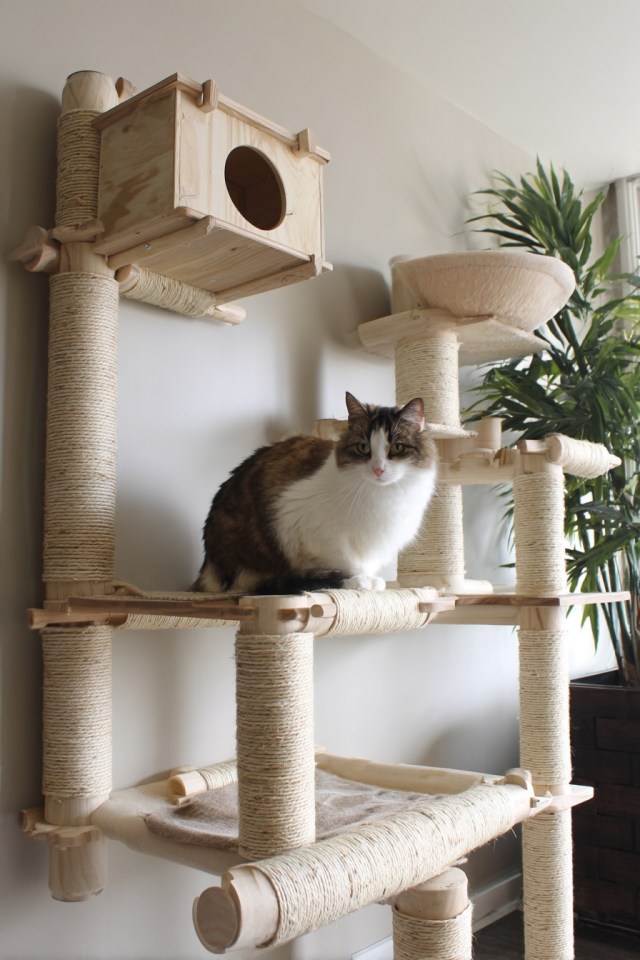

For those who prefer a modern, modular, and extremely durable design, using PVC piping creates a unique, industrial-style cat structure that is very easy to sanitize and modify. You can cut the pipes to create a multi-level frame, connecting them with standard fittings to build a robust climbing skeleton. Wrapping the pipes in thick, natural sisal rope provides a massive scratching surface that will last for years. This design is particularly great because you can add or remove levels as your cat ages or as your space changes. It is a highly practical, budget-friendly approach that focuses on longevity and utility over traditional, plush-covered aesthetics.
4.) The Stacked Crate Fortress


Upcycling wooden crates is a charming way to build a multi-level cat tree that provides plenty of storage space for you and hidden nooks for your cat. Simply stack the crates in an offset, pyramid-like arrangement and secure them together with heavy-duty screws or brackets. You can leave some crates open to serve as tunnels and cozy dens, while others can be capped with soft, removable cushions for comfortable napping spots. This design is visually rustic and fits perfectly in a farmhouse or cottage-style home. It is a fantastic, low-cost project that encourages your cat to explore the different levels while adding a unique, architectural element to your room.
5.) The Repurposed Bookshelf Transformation


If you have an old, sturdy wooden bookshelf that has seen better days, you can easily transform it into a luxury cat tower with a few clever modifications. Remove some of the shelves to create taller spaces for climbing and lounging, or cut circular holes in the shelves to serve as portals between levels. You can cover the exterior of the shelves with carpeting or sisal fabric, making the entire piece a massive scratching post. This is a brilliant way to recycle furniture, giving it a second life as a dedicated feline sanctuary that fits seamlessly into your library or home office setup.
6.) The Tension Rod Floor-to-Ceiling Climb


A floor-to-ceiling cat tree is the ultimate height advantage for any climber, and a tension-rod-based design allows you to achieve this without permanent installation. By using a heavy-duty, adjustable tension pole as the central spine, you can attach various circular or square platforms that extend outward at different heights. This creates a vertical trail that reaches all the way to the ceiling, giving your cat a bird’s-eye view of the room. It is a sleek, minimalist option that takes up very little footprint but offers a massive amount of vertical space, making it perfect for active cats who love to jump and perch as high as possible.
7.) The Hanging Hammock Corner


For the cat who loves to relax more than climb, a hanging hammock tower is a dreamy and simple DIY project that is incredibly easy to assemble. By installing a series of hooks in the corner of a room, you can suspend multiple layers of soft fabric hammocks one above the other. This creates a cozy, swaying vertical structure that is incredibly soothing for your cat. You can make the hammocks from durable, machine-washable canvas or plush fleece, depending on your cat’s preference. This project requires minimal tools and can be completed in an afternoon, providing a dedicated, safe lounge area that is gentle on joints and muscles.
8.) The Suitcase Tower


If you enjoy collecting vintage items, a suitcase cat tree is a quirky, conversation-starting project that repurposes old travel luggage into high-end cat furniture. By stacking old hard-shell suitcases on top of a sturdy base, you can open them up to create unique, secure dens for your cat to sleep in. The exterior of the suitcases acts as a sturdy frame, while the interior is lined with soft, inviting bedding. It is a fantastic aesthetic choice for a eclectic or retro-themed home. This design feels like a little piece of history, providing your cat with a private, enclosed space that feels safe, warm, and distinctly stylish.
9.) The Geometric Plywood Tower


For a clean, Scandinavian-inspired look, building a tower out of high-quality birch plywood creates a modern, architectural structure that feels like a piece of high-end furniture. This design typically features flat, angular platforms with cut-outs that allow your cat to weave in and out as they climb. The plywood is durable, easy to wipe clean, and offers a smooth, neutral surface that looks great in any contemporary home. You can paint or stain the wood to match your decor, making the cat tree feel like a deliberate, integrated part of your living room rather than an eyesore. It is a sophisticated design for the design-conscious owner.
10.) The Cardboard Castle


Sometimes the simplest ideas are the best, and a multi-level cardboard castle is a project that you can constantly change, expand, and personalize. By taping together heavy-duty shipping boxes, you can create a complex network of tunnels, chambers, and towers. You can cut windows, doorways, and skylights into the sides, providing multiple entry and exit points for playful hunting games. While it might not be a permanent piece of furniture, it is an incredible enrichment tool that you can build with recycled materials at zero cost. It is a temporary, fun, and ever-evolving playground that your cat will love to explore and customize with their own scent.
A Lasting Blueprint for Your Feline Haven


Embarking on the journey of building a DIY cat tree is a beautiful way to provide for your pet, turning simple materials into a sanctuary that reflects both your creativity and your love for them. Whether you choose the structural elegance of a plywood tower or the natural, earthy feel of a branch-based climbing system, the most important outcome is that your cat feels safe, stimulated, and at home. As you finish your project, remember that the best addition to any cat tree is a little bit of catnip and plenty of encouragement. May your build be sturdy, your design be clever, and your cat enjoy countless hours of adventure in their new favorite spot.
