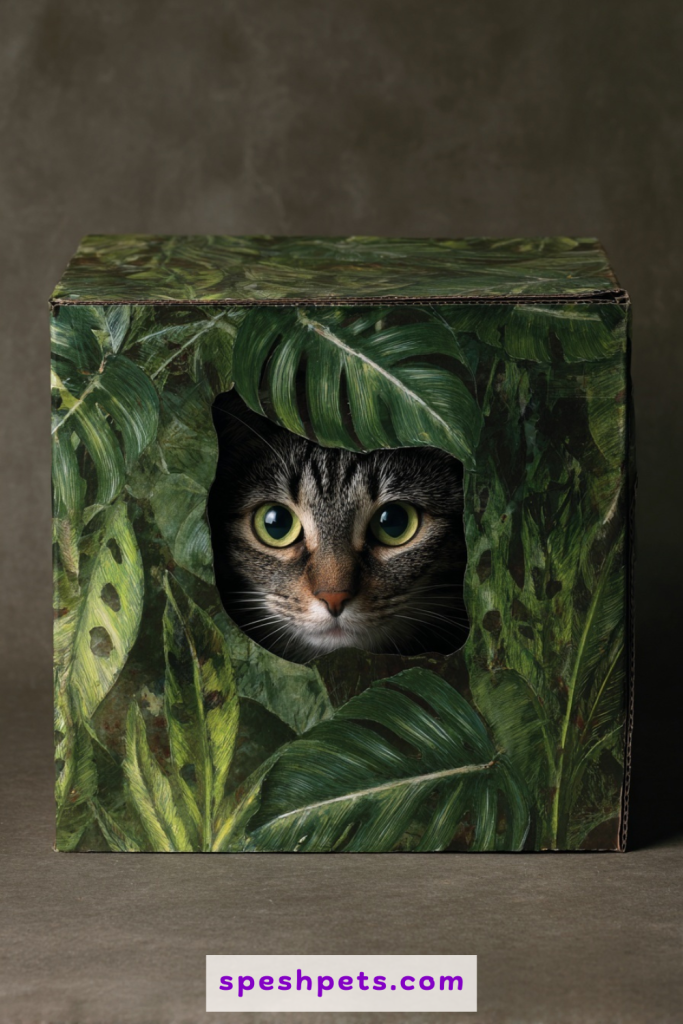
Integrating a cat into your life brings endless warmth and entertainment, but it also introduces the ultimate interior design challenge: the litter box. For anyone who takes pride in a curated and peaceful home environment, a plastic tray of clay sitting in the middle of a room can feel like a glaring aesthetic compromise. However, maintaining a clutter-free home and ensuring your feline friend has a private place to go are not mutually exclusive goals. By thinking creatively about furniture and layout, you can transform these necessary utilities into seamless parts of your decor. Hiding the litter box is as much about your own mental clarity as it is about your pet’s privacy, creating a space where the less glamorous side of pet ownership remains tucked away with clever, stylish discretion.
1.) The Vintage Trunk Conversion
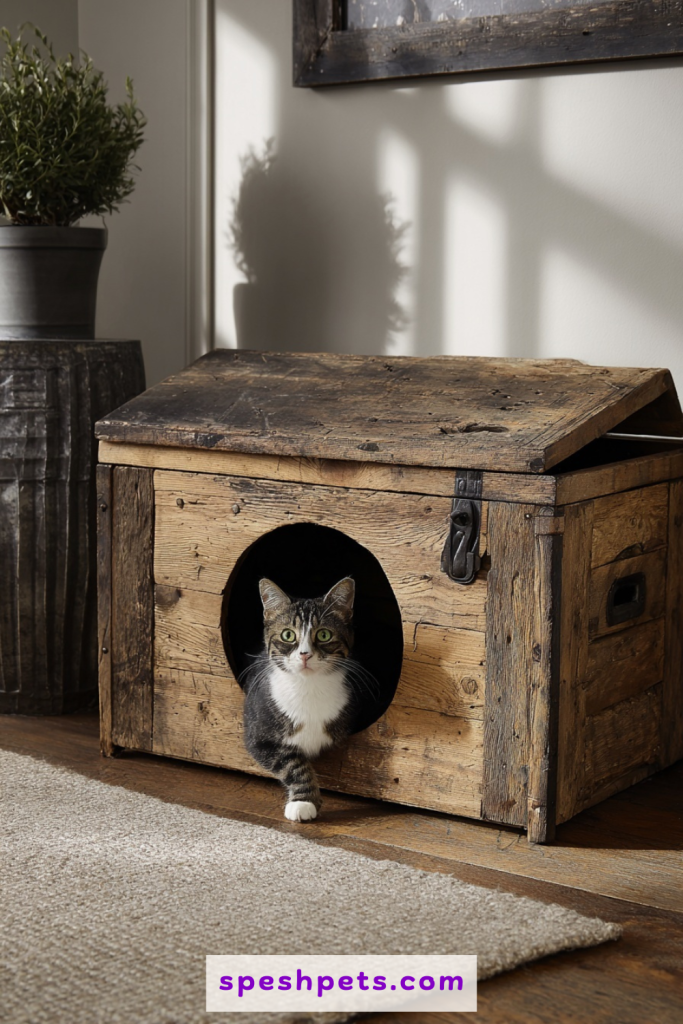
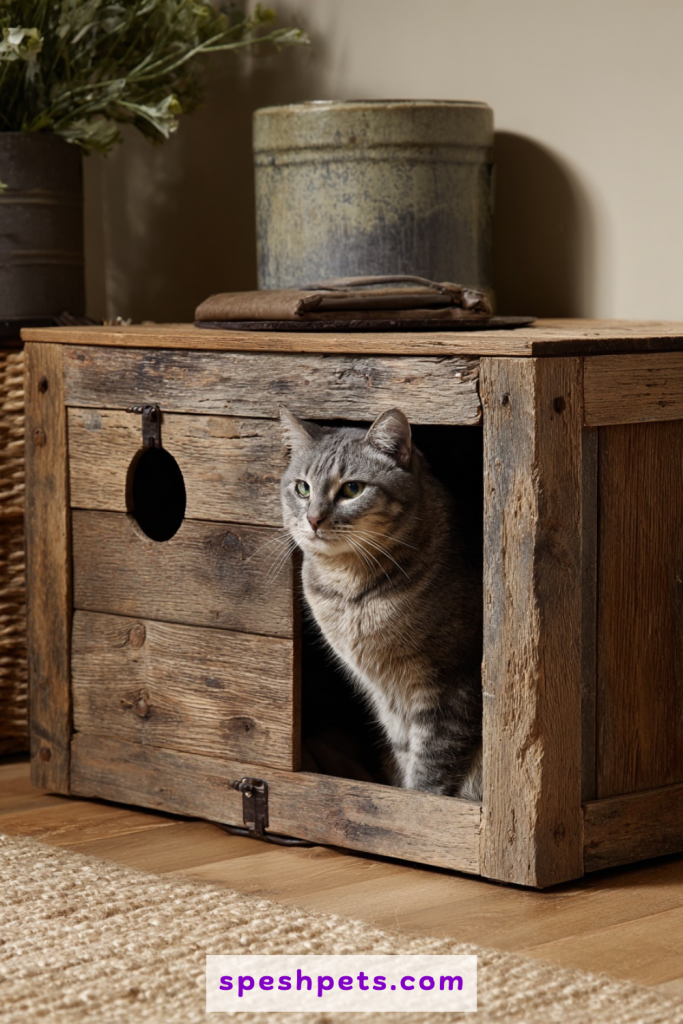
A vintage trunk or a weathered wooden chest offers a fantastic way to blend feline utility with antique charm. By carefully cutting a circular entry hole into the side or back, you transform a beautiful storage piece into a private sanctuary for your cat. The heavy, hinged lid provides excellent access for deep cleaning, and the sturdy wood material helps dampen the sound of digging while containing stray litter. This approach works particularly well in bedrooms or living areas where you want the litter box to look like a curated piece of furniture rather than a plastic utility item. It adds layers of character to your space while keeping the mess entirely out of sight and off the floor.
2.) Seamless Custom Cabinetry
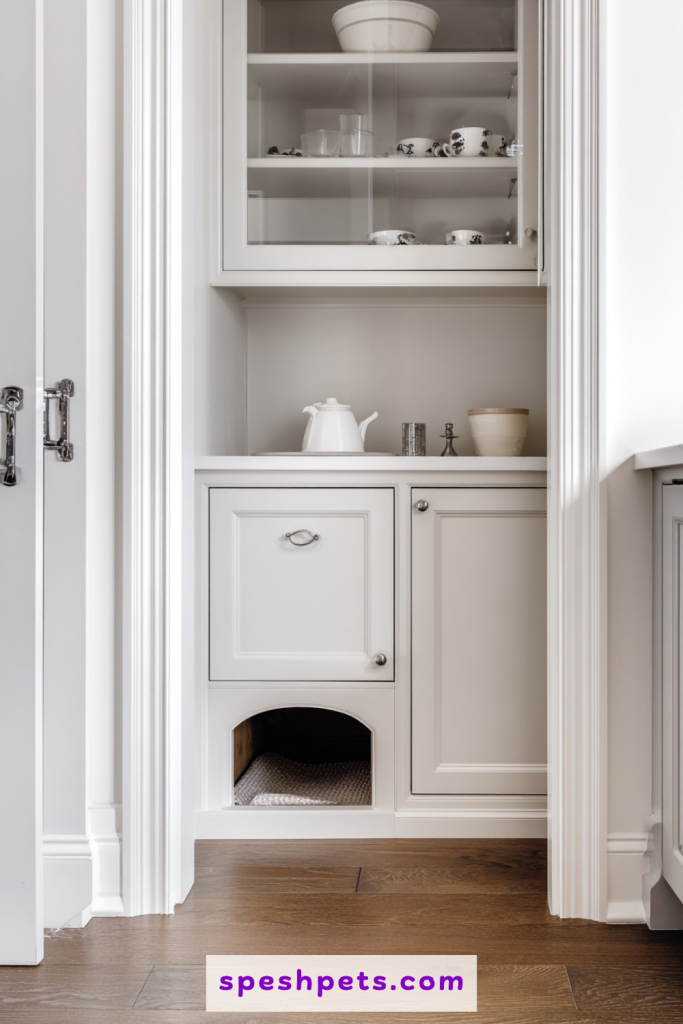
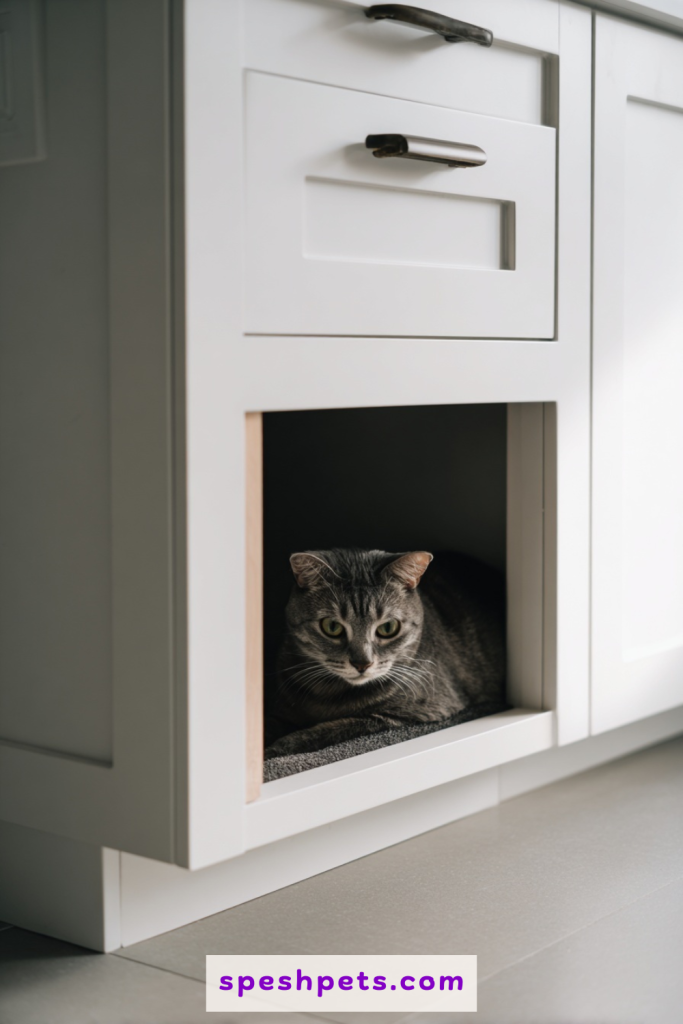
Integrating a litter box directly into your built-in cabinetry is perhaps the most seamless solution for a truly modern, minimalist home. By dedicating one lower cupboard in a hallway or mudroom to the cat, you eliminate floor clutter entirely. You can install a small cat-flap in the door or leave a subtle, arched opening at the base. This method allows you to match the finish and hardware of the enclosure to the rest of your kitchen or bathroom, making the litter area virtually invisible to guests. It also provides extra vertical space within the cabinet to store scoops, extra bags, and deodorizing sprays, keeping all your supplies centralized and tidy.
3.) Under-Sink Storage Nooks
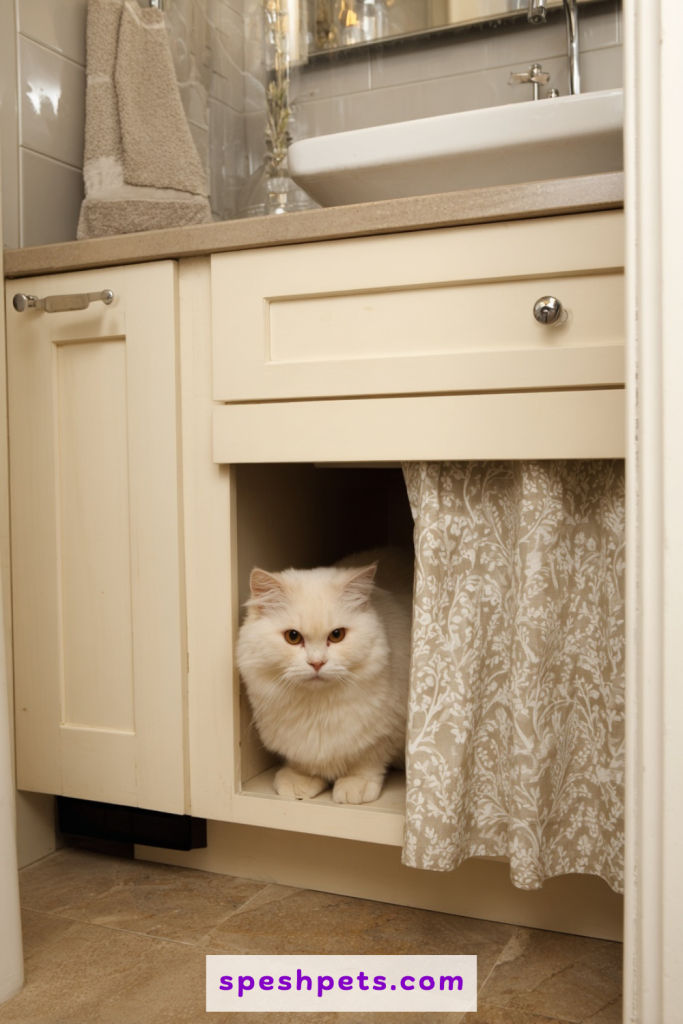
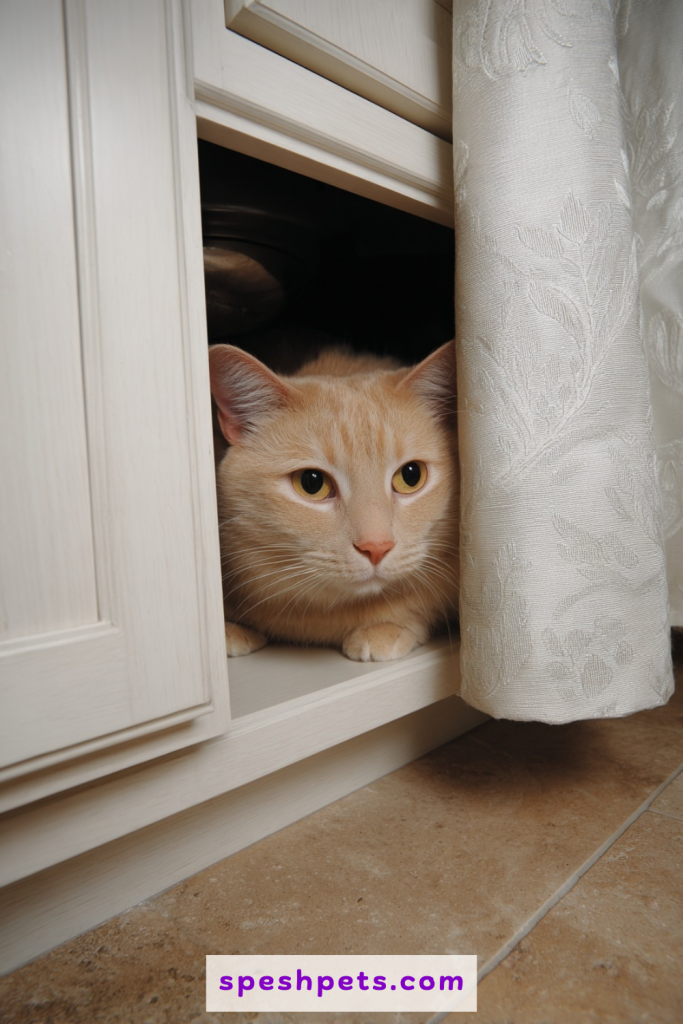
The space beneath a bathroom or laundry room sink is often underutilized and provides an ideal, out-of-the-way spot for a litter box. Since these areas usually have tiled or easy-to-clean flooring, they are perfect for managing the occasional stray grain of tracking litter. By removing a cabinet door or installing a decorative curtain on a tension rod, you create a private nook that remains accessible for the cat but hidden from direct view. This location is also functionally superior, as it keeps the box near ventilation systems and water sources, making the frequent task of cleaning and maintenance much more efficient and less of a chore for a busy pet owner.
4.) Dual-Purpose Side Tables
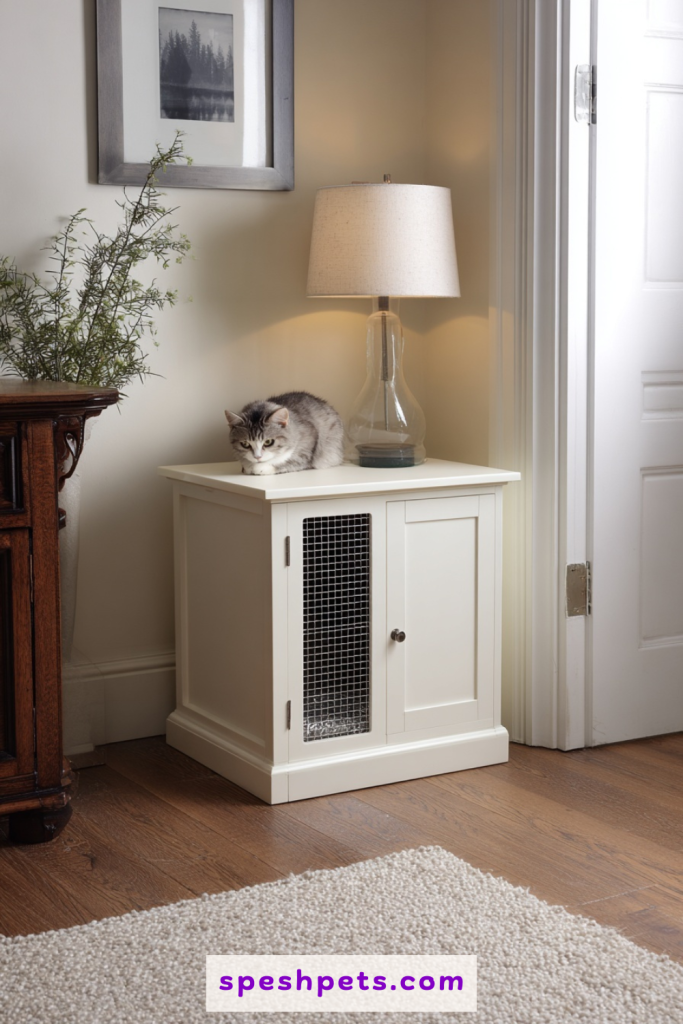
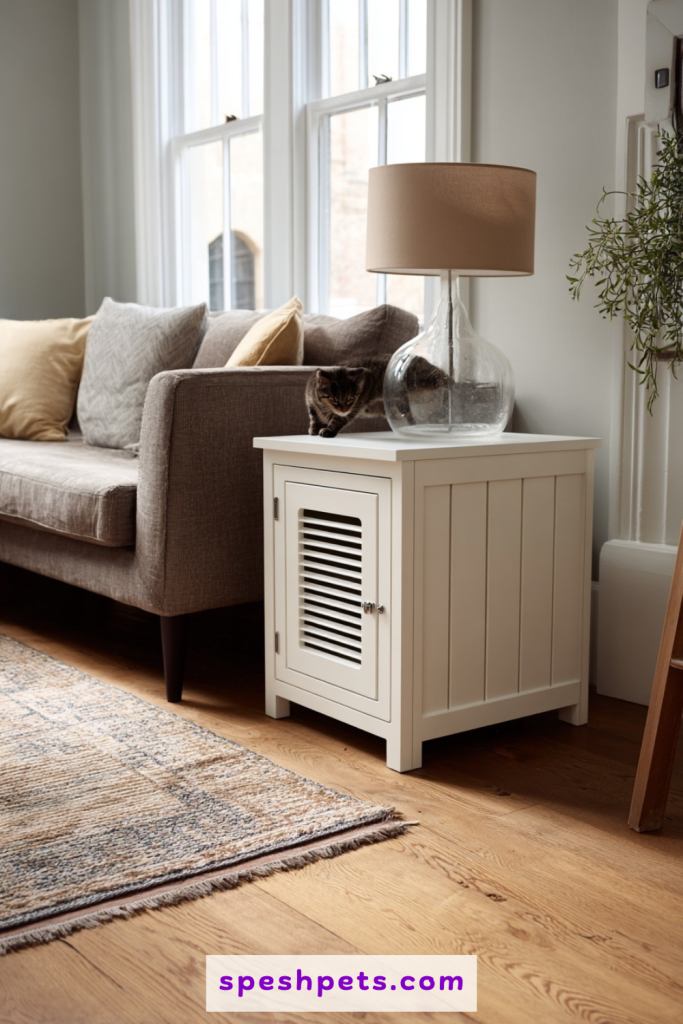
Many furniture retailers now offer side tables specifically designed to house a standard-sized litter pan. These pieces serve a dual purpose, acting as a functional surface for a lamp or a stack of books while secretly containing your cat’s business below. The design usually features a vented back for airflow and a large front door for easy access during cleaning time. Choosing a style that matches your existing coffee table or nightstand ensures that the room feels cohesive rather than fragmented by pet accessories. It is a brilliant way to reclaim floor space in smaller apartments where every square inch of real estate is precious and must serve a clear aesthetic purpose.
5.) The Entryway Bench Solution
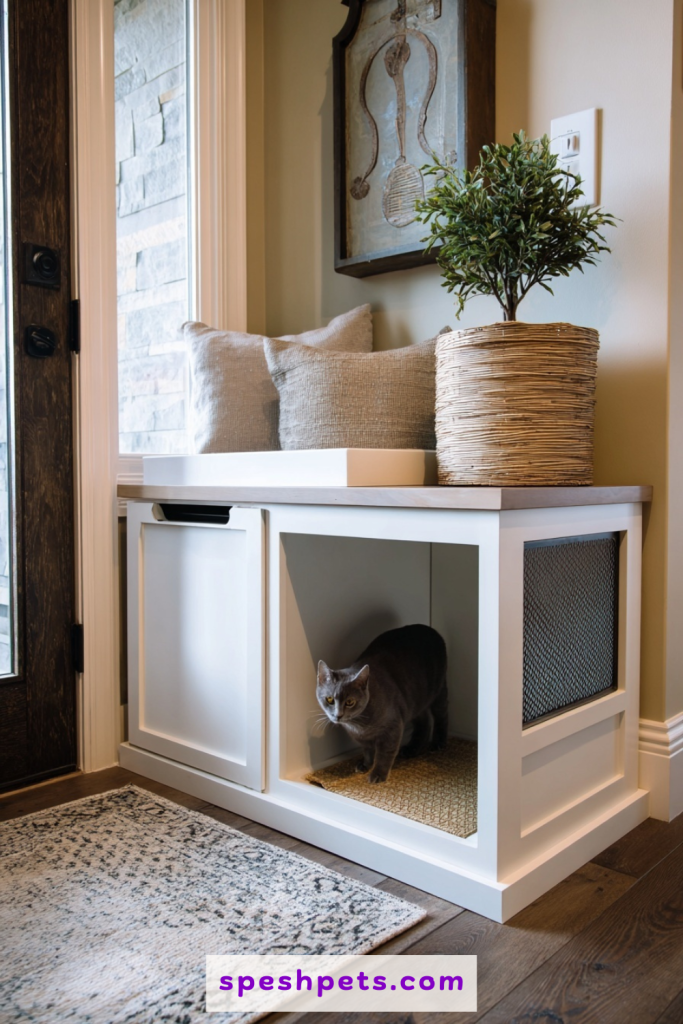
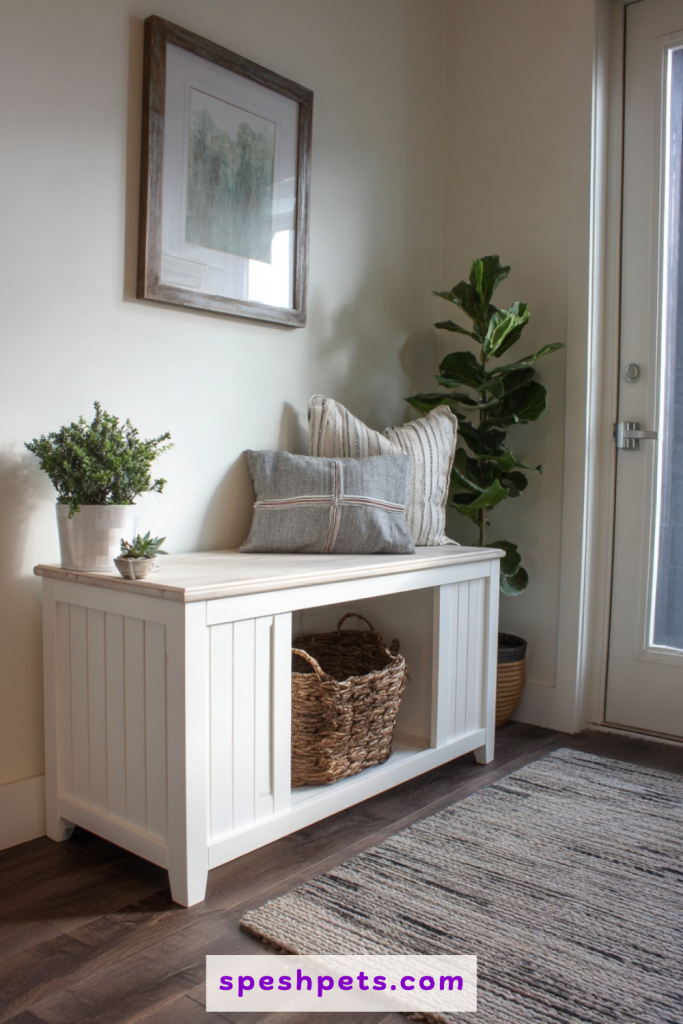
An entryway bench is often the first thing people see when they walk into a home, making it a clever place to hide a litter box while providing a spot to put on shoes. A hollow bench with a flip-top seat provides ample room for even the largest litter trays. Adding a small entrance on the side allows your cat to come and go without disturbing the primary function of the bench. This setup is particularly effective for trapping tracking litter before it reaches the rest of the house, as you can place a small textured mat inside the enclosure. It turns a utility area into a functional, welcoming part of your home foyer.
6.) Wicker Basket Camouflage
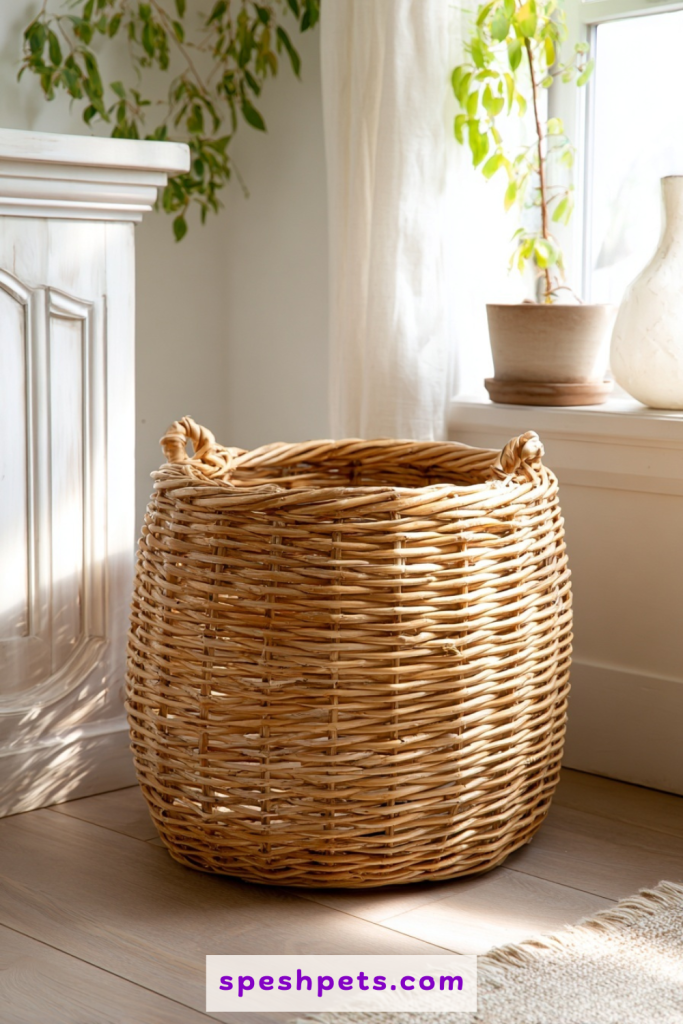
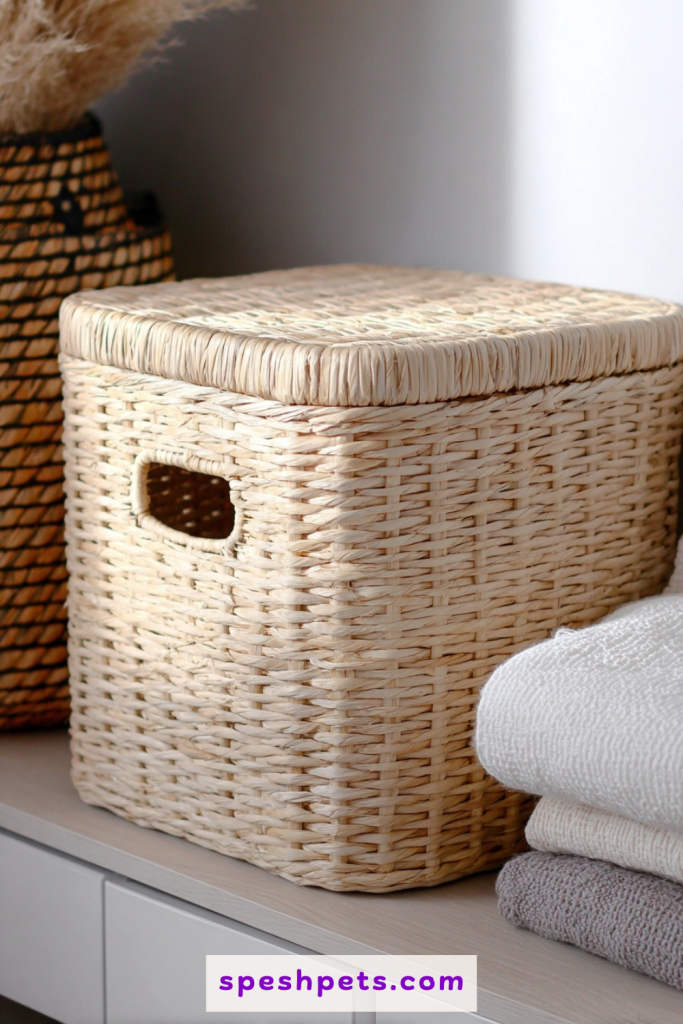
Large wicker or woven baskets offer a natural, textured look that fits perfectly with bohemian or coastal decor styles. By removing the bottom of the basket and placing it over a high-sided litter tray, you create a breathable and lightweight cover that looks like simple storage. The natural gaps in the weave provide excellent ventilation while keeping the interior obscured from sight. This is an inexpensive DIY solution that can be moved easily when you need to vacuum or rearrange the room. It softens the look of the pet area and brings an organic element into your design scheme, proving that hidden solutions can be both practical and beautiful.
7.) The Tucked-Under-the-Stairs Room
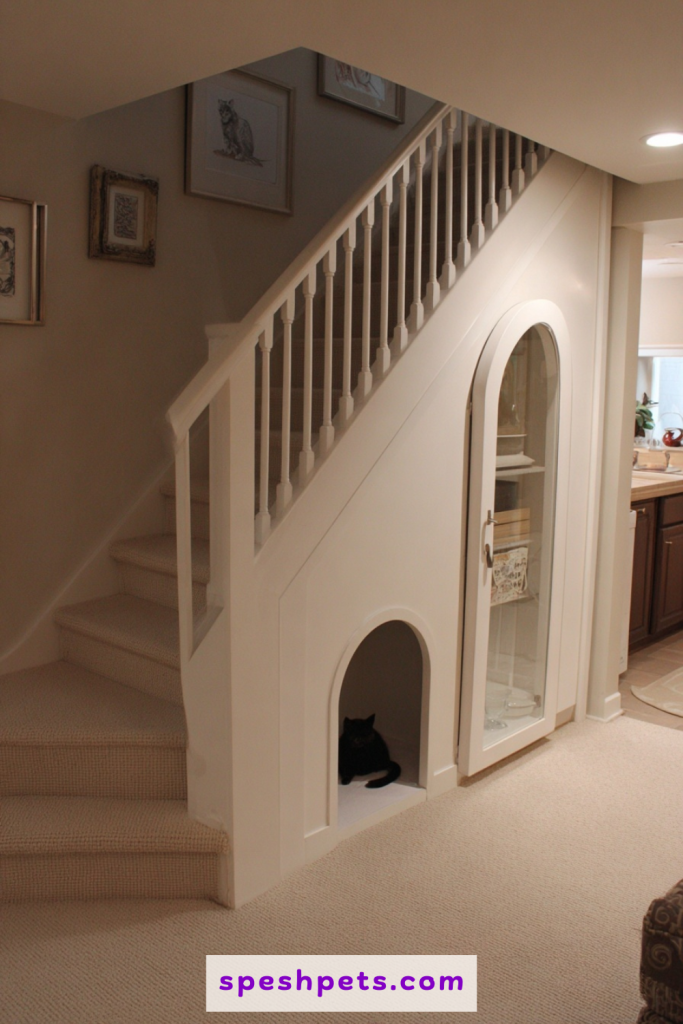
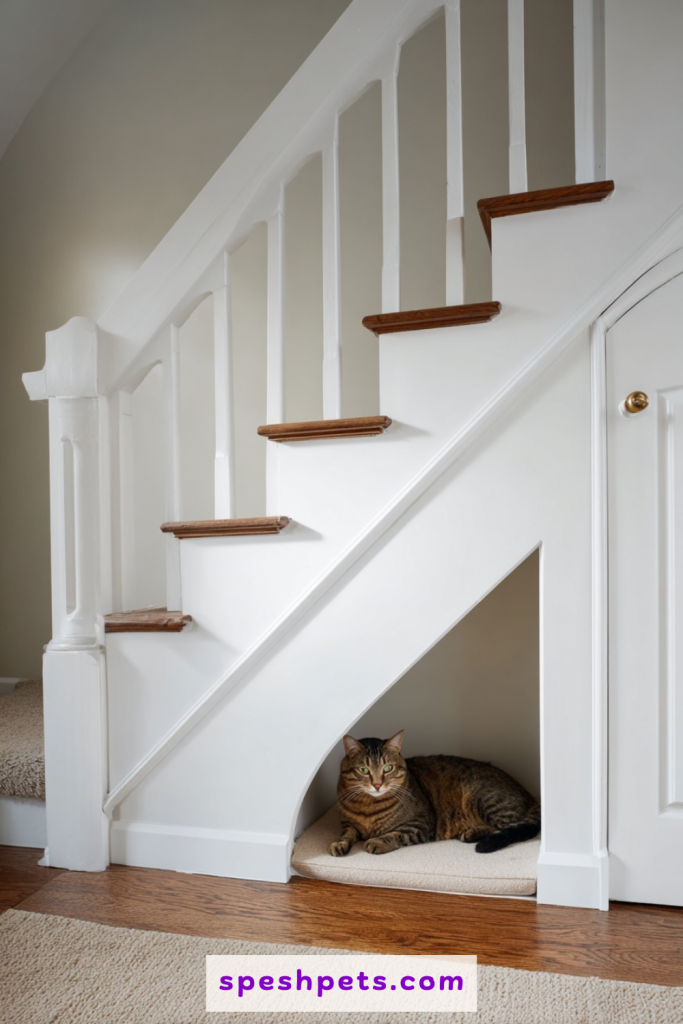
The awkward, triangular space under a staircase is a goldmine for hidden pet solutions that stay out of the main foot traffic. Often used as a dark storage closet, this area can be converted into a dedicated pet room with a built-in litter station. By installing a small arched doorway in the drywall, you give your cat a private, quiet space far away from the noise of the house. This location is excellent for odor control, as it is naturally separated from the main living areas. It utilizes architectural quirks to your advantage, turning what would be a wasted corner into a functional, hidden asset for your feline friend.
8.) Decorative Room Divider Screens
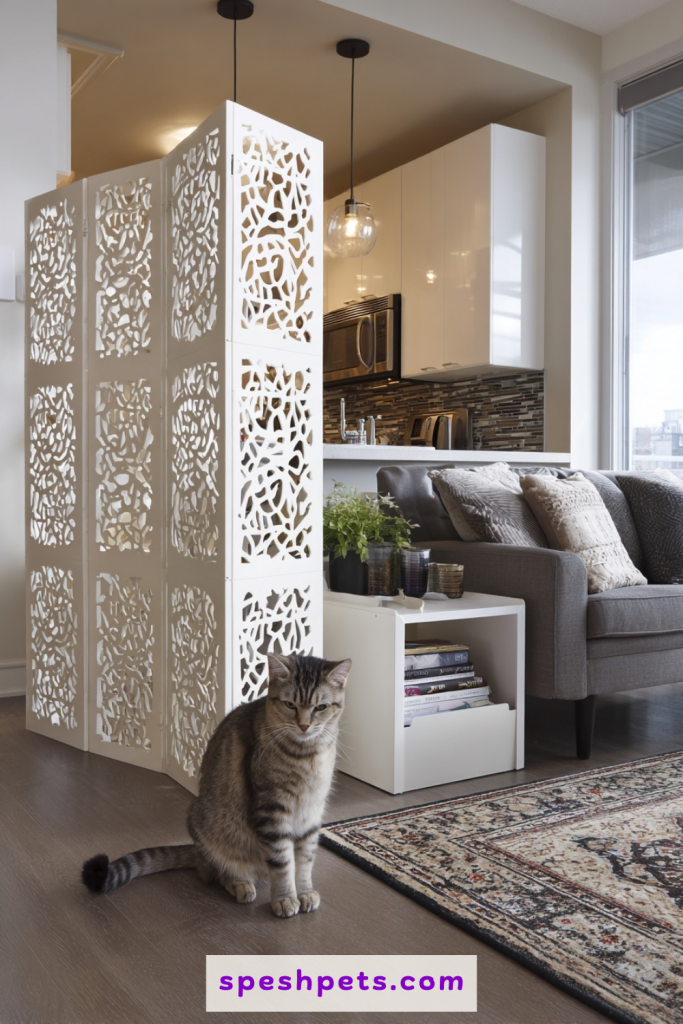
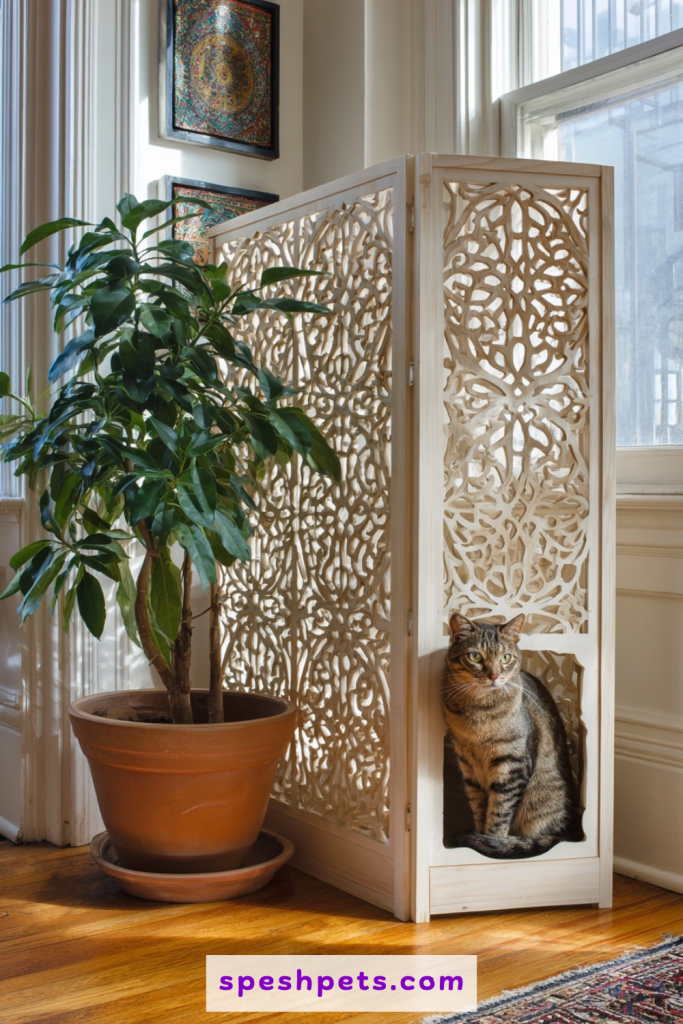
For those living in open-concept spaces or studio apartments, a decorative room divider can serve as a stylish screen for a litter box. Placing the tray behind a folding screen or a deep bookshelf creates a dedicated zone for the cat without the need for permanent renovation. This approach allows for plenty of airflow while visually blocking the utility area from the kitchen or sleeping quarters. You can choose a divider with intricate carvings or fabric panels to enhance the mood of the room. It provides the cat with a sense of security and privacy while maintaining the clean, uninterrupted lines of your living environment.
9.) The Converted Potted Plant
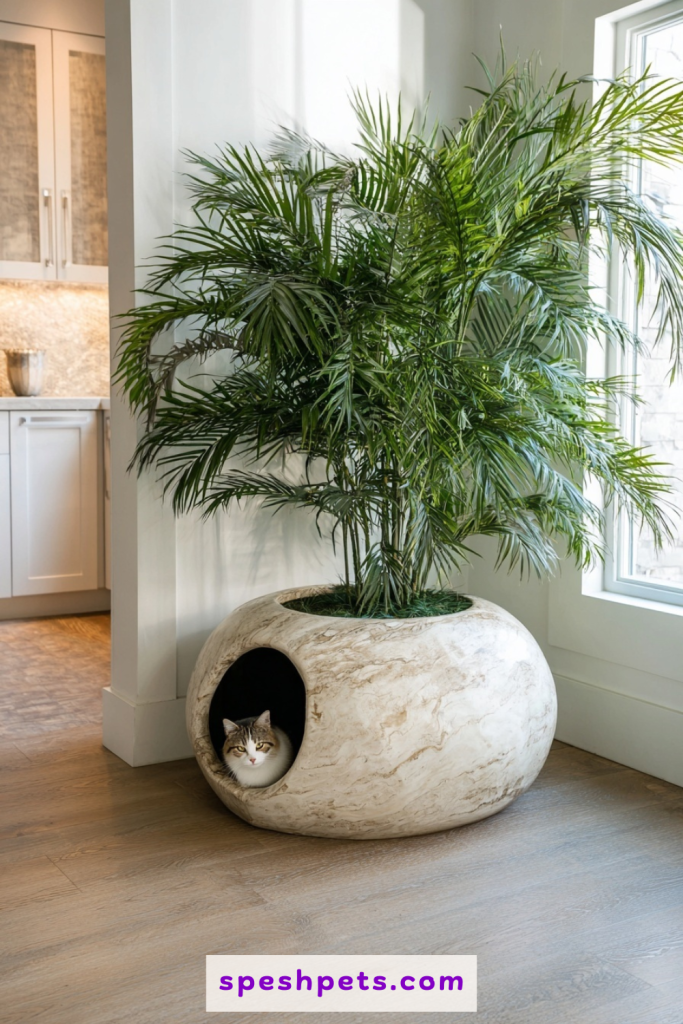
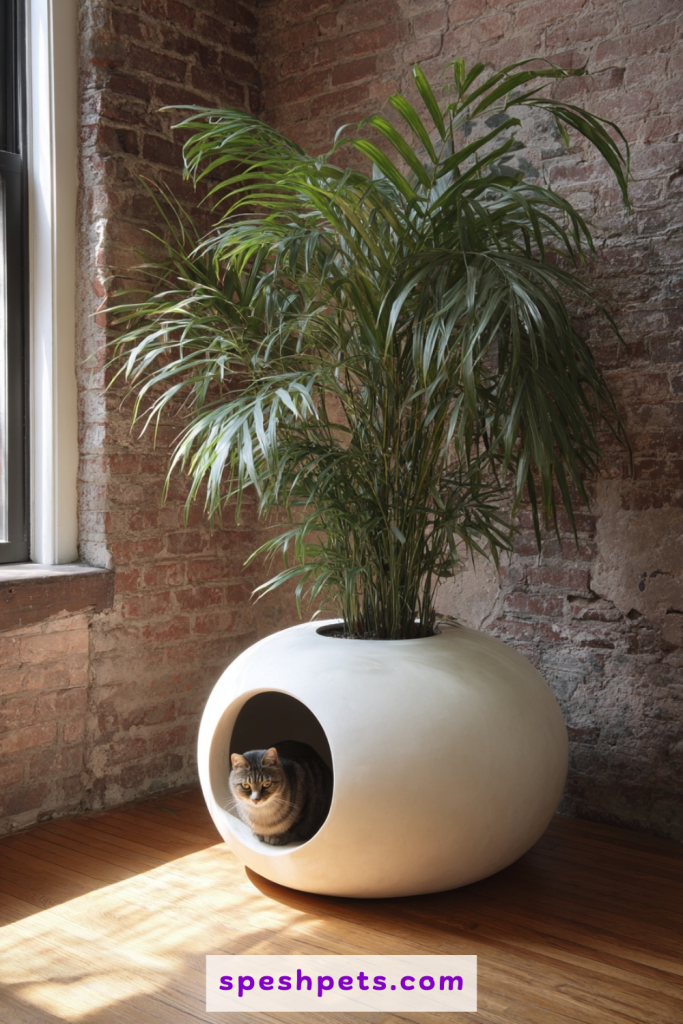
Large, faux-stone or ceramic planters are now being manufactured with hollow bases specifically designed to hide litter boxes. These items are perfect for homeowners who want to add greenery to their space while solving a practical problem. The cat enters through a discreet hole in the side, and the top of the planter holds a realistic artificial plant. This is perhaps the most deceptive hiding spot, as most guests will never suspect that the beautiful palm in the corner is actually a feline restroom. It adds a fresh, natural aesthetic to your home while keeping the less glamorous parts of pet care completely out of sight and mind.
10.) Laundry Room Cabinet Nooks
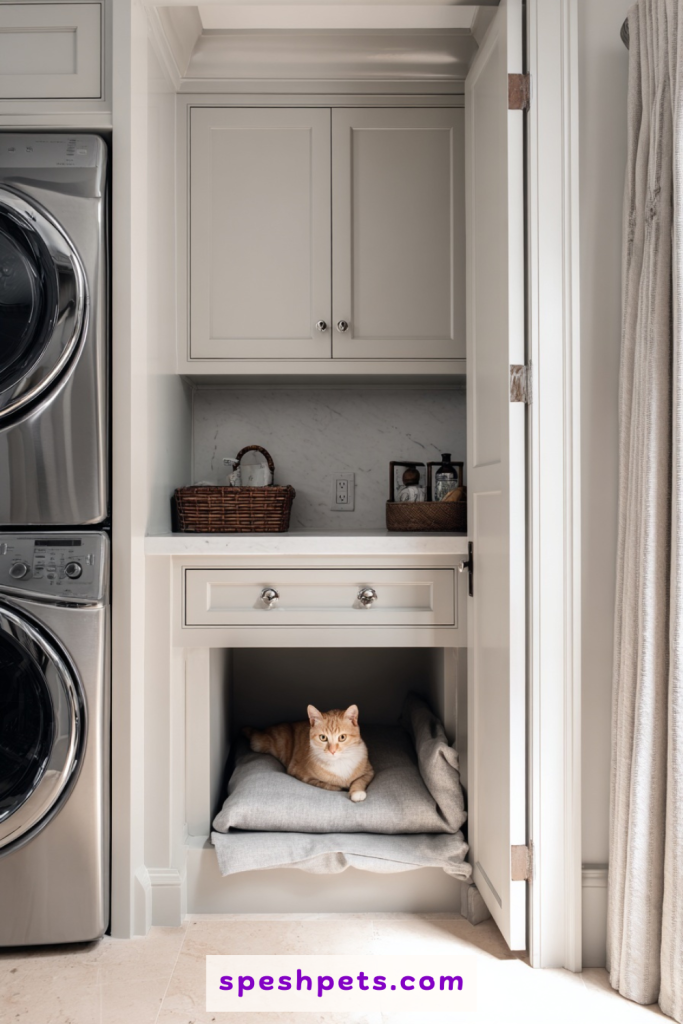
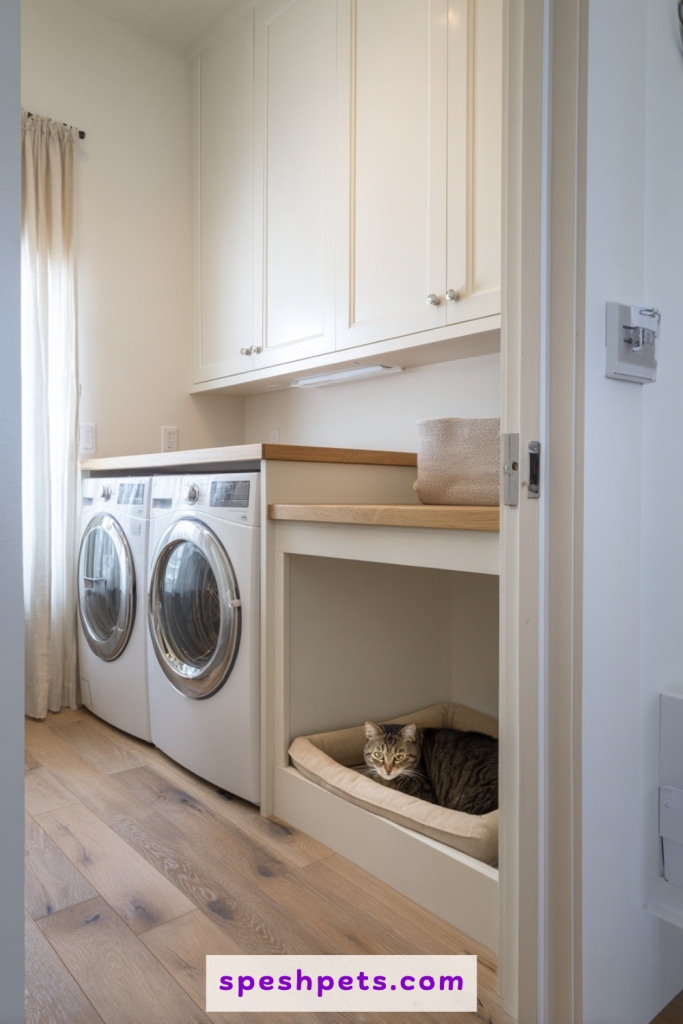
The laundry room is a natural choice for a litter box because it is already a high-functioning utility space. However, instead of leaving the box in the middle of the floor, try building a custom nook under a countertop or between the washer and dryer. This creates a designated zone that keeps the litter away from clean laundry and walking paths. You can add a small café curtain or a swinging door to further hide the box when it is not in use. Keeping the litter box in the laundry room also makes it easier to manage odors, as these rooms are typically well-ventilated and situated away from social areas.
In Closing
Creating a home that accommodates both your aesthetic standards and your cat’s natural instincts requires a bit of creativity, but the results are well worth the effort. A hidden litter box reduces the visual clutter that can lead to daily stress, allowing you to focus on the joy of pet ownership rather than the mess. Whether you choose a high-end furniture piece or a simple DIY basket hack, the goal is to create a space where everyone feels comfortable and the house stays tidy. By integrating these clever solutions, you prove that a stylish, sophisticated home and a happy, healthy cat can indeed coexist in perfect, clutter-free harmony.
