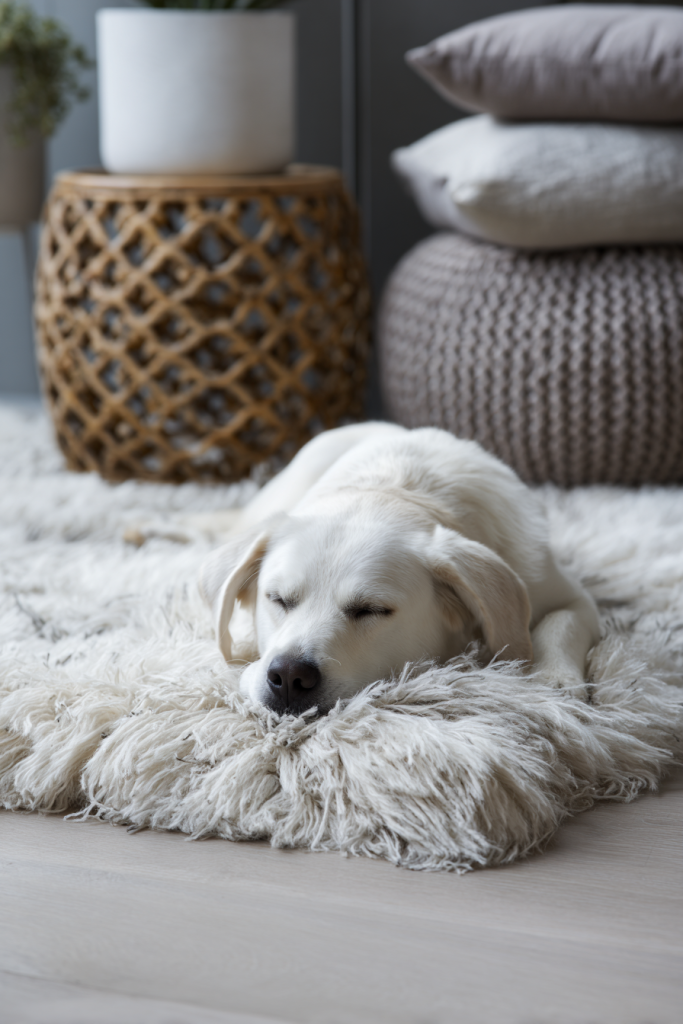
Dogs are naturally den animals, meaning they have an instinctual urge to seek out a secure and enclosed space where they can feel completely safe from the hustle and bustle of a busy household. Creating a dedicated dog corner is about more than just tossing a cushion on the floor; it is about honoring that biological need for a private sanctuary. When a dog has a territory that is exclusively theirs, it can significantly reduce anxiety and provide a sense of groundedness that improves their overall behavior and confidence. A well-designed corner serves as a psychological retreat where they can decompress after a long walk or a loud afternoon, allowing them to remain part of the family dynamic while having a private exit strategy whenever the world feels a little too overwhelming for their sensitive ears and noses.
1.) The Under-Stairs Architectural Alcove
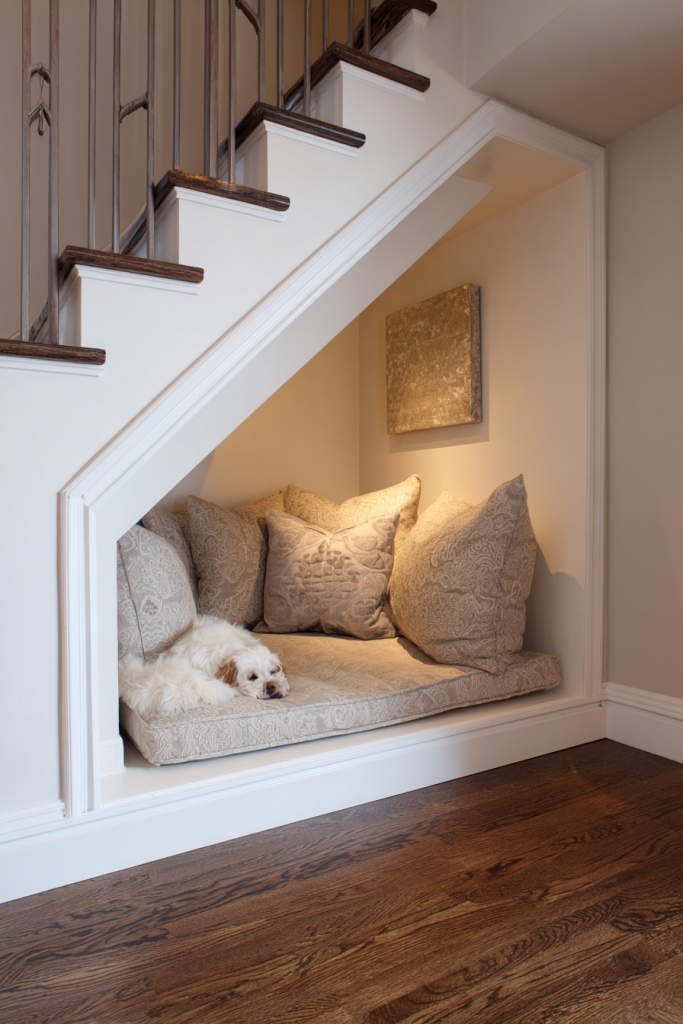
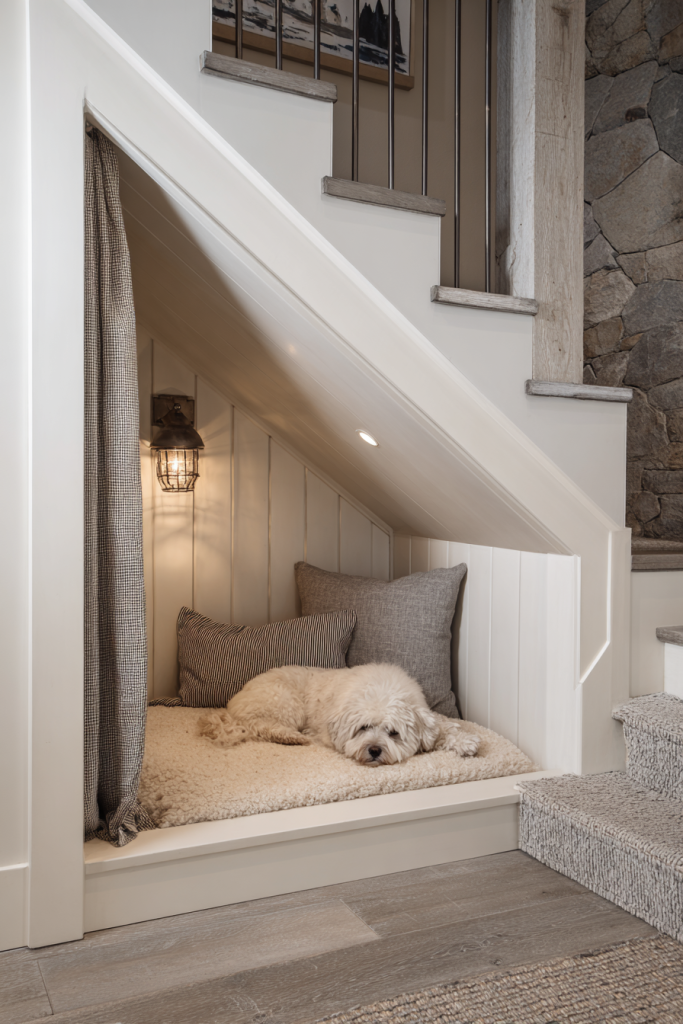
Dead space under a staircase is often the most underutilized real estate in a home, yet it makes for a perfect, cozy dog den. By opening up that wall and finishing the interior with soft lighting and a custom-fitted plush bed, you create a built-in sanctuary that takes up zero floor space in your main living area. It mimics the feeling of a natural cave, providing three solid walls of protection that many dogs find incredibly comforting during thunderstorms or fireworks. Adding a decorative gate or a stylish fabric curtain can turn it into a private suite for when you have guests over, ensuring your pet feels like they have a VIP room rather than being tucked away in a drafty hallway.
2.) The Repurposed Antique Armoire
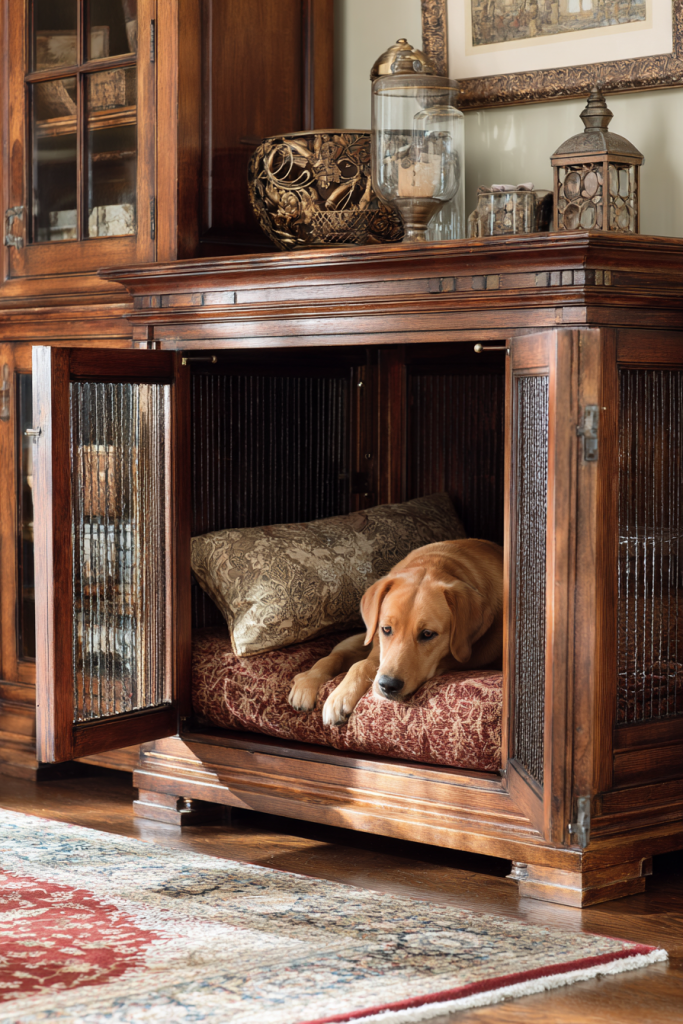
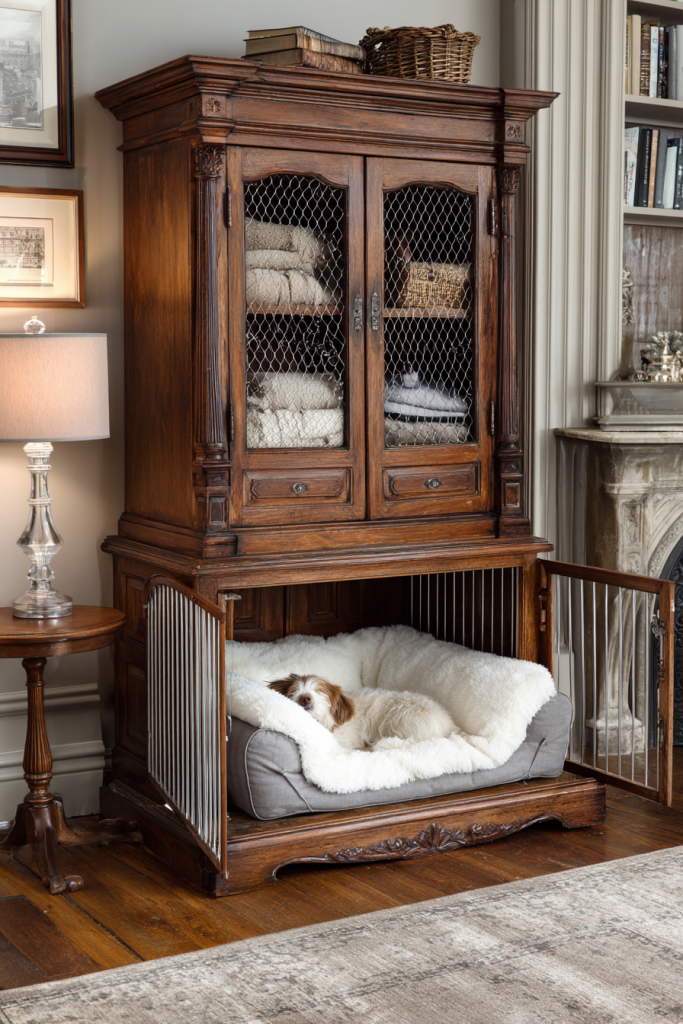
An old wooden armoire or a vintage cabinet can be easily transformed into a high-end pet suite with just a few thoughtful modifications. By removing the bottom doors and lining the interior with a durable, washable fabric, you create a furniture piece that looks like a beautiful antique but functions as a sophisticated dog house. The upper shelves can be used to store leashes, treats, and grooming supplies, keeping all of your pet essentials in one organized and aesthetic location. This approach is ideal for homeowners who want to maintain a classic interior design style while still providing a luxurious and private retreat for their furry companion, proving that pet ownership does not have to mean compromising on your personal home decor standards.
3.) The Whimsical Corner Teepee
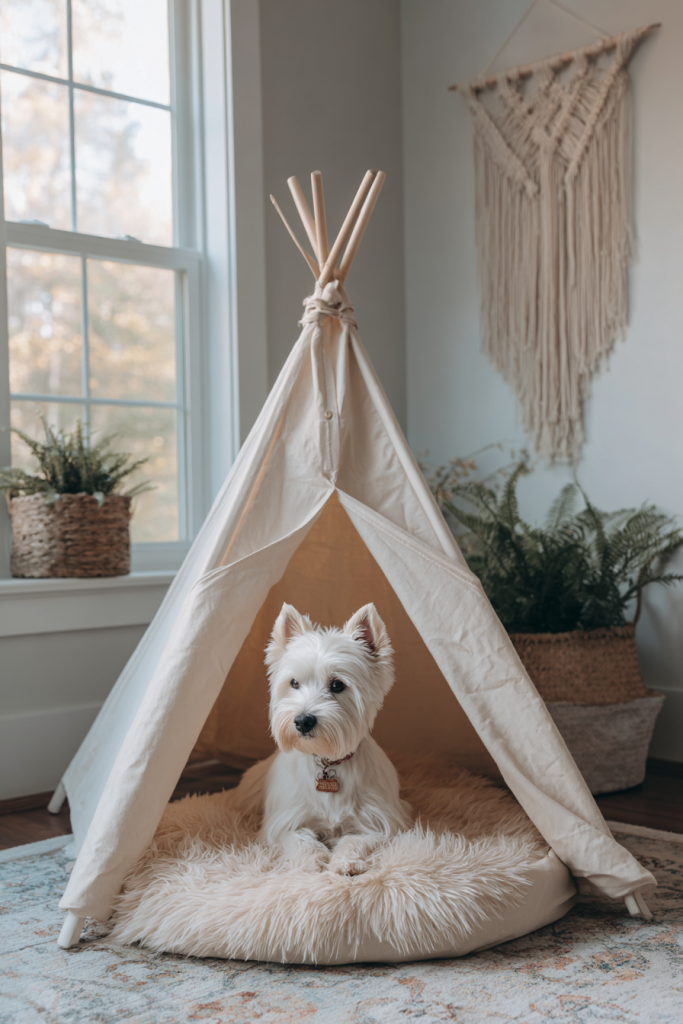
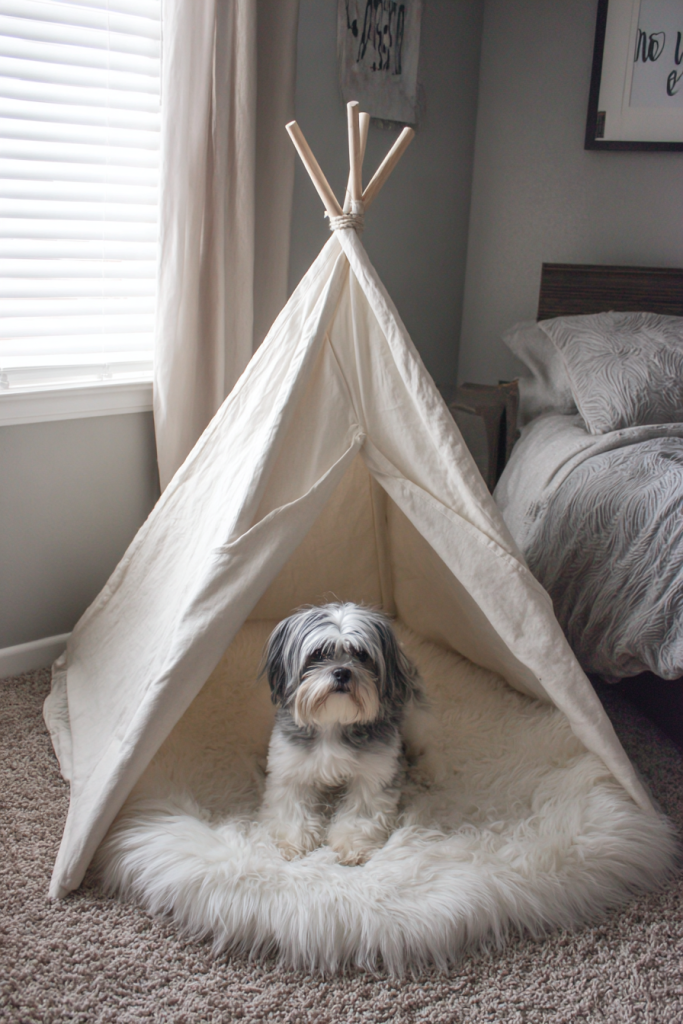
For a touch of bohemian flair that fits into almost any room, a fabric teepee is a delightful and non-permanent way to define a dog’s corner. These structures provide a soft, enclosed feeling that many smaller or medium-sized breeds find irresistible for afternoon naps. Because they are lightweight and easy to move, you can reposition the haven whenever you decide to rearrange your furniture. Choosing a canvas material in a neutral tone ensures that it blends seamlessly with your existing decor, while adding a faux-fur rug inside makes it the ultimate cozy destination. It turns a simple corner into a playful focal point that celebrates your dog’s personality while adding a layer of soft texture and visual interest to your living space.
4.) The Integrated Kitchen Island Kennel
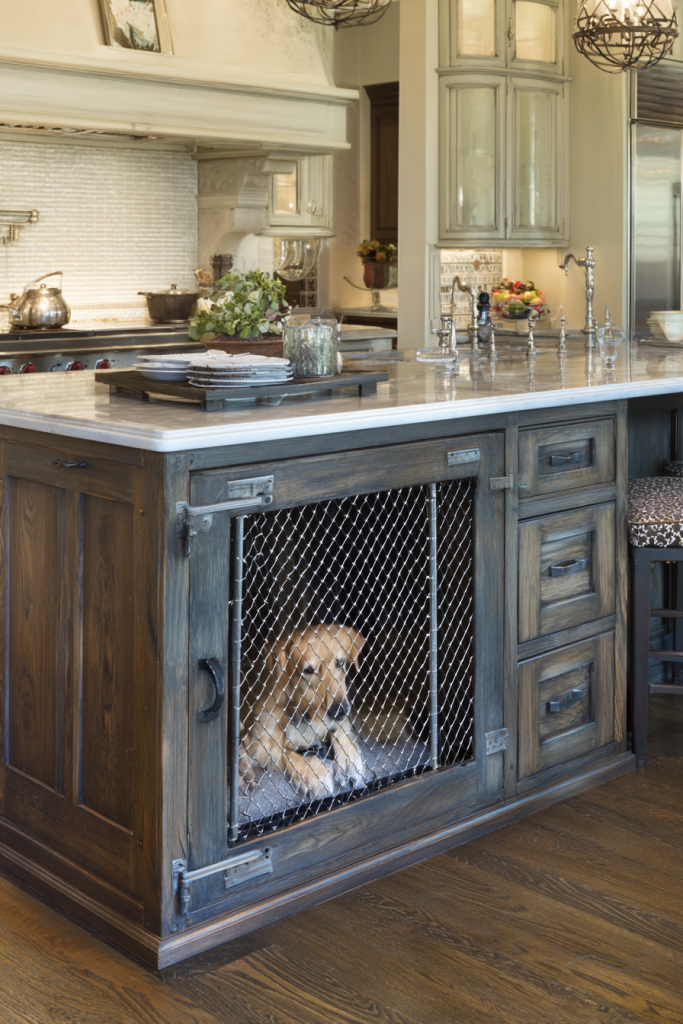
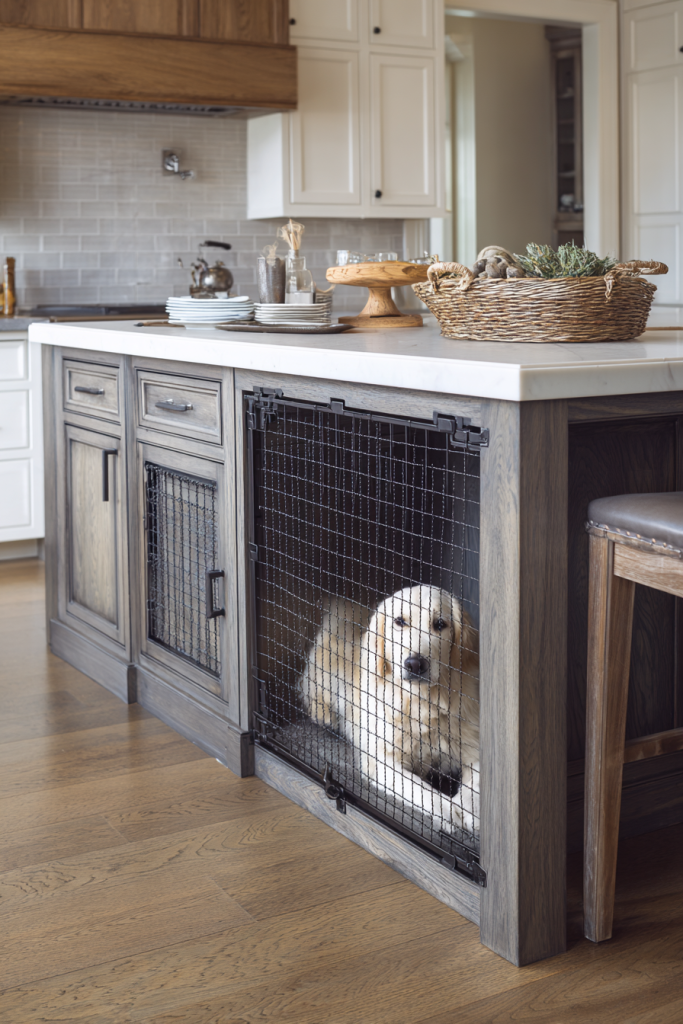
If your dog loves to be in the heart of the home while you are cooking, integrating a kennel into the end of your kitchen island is a brilliant use of space. By replacing a standard cabinet with a decorative wire or wooden mesh door, you give your dog a front-row seat to the kitchen action without them being underfoot. This design keeps the floor clear and allows the dog to feel included in the family’s daily rhythms while staying safe and secure. It is an excellent solution for high-traffic areas where a traditional crate might be a tripping hazard. This custom feature adds significant value to your home by showing a high level of intentionality and care for the needs of every family member, including the four-legged ones.
5.) The Window Bench Observation Deck
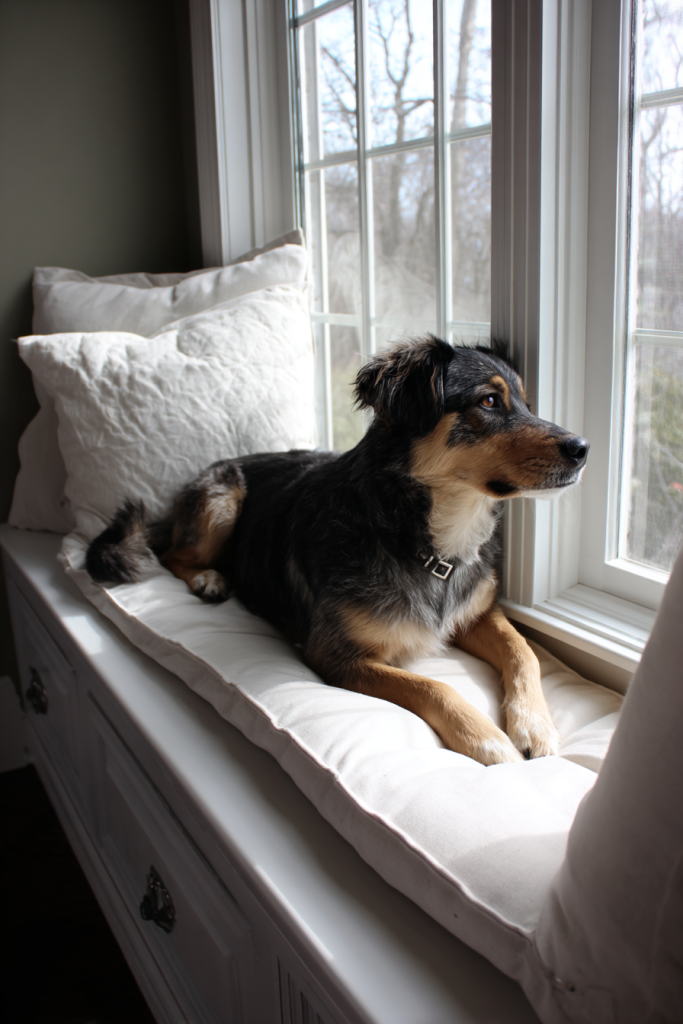
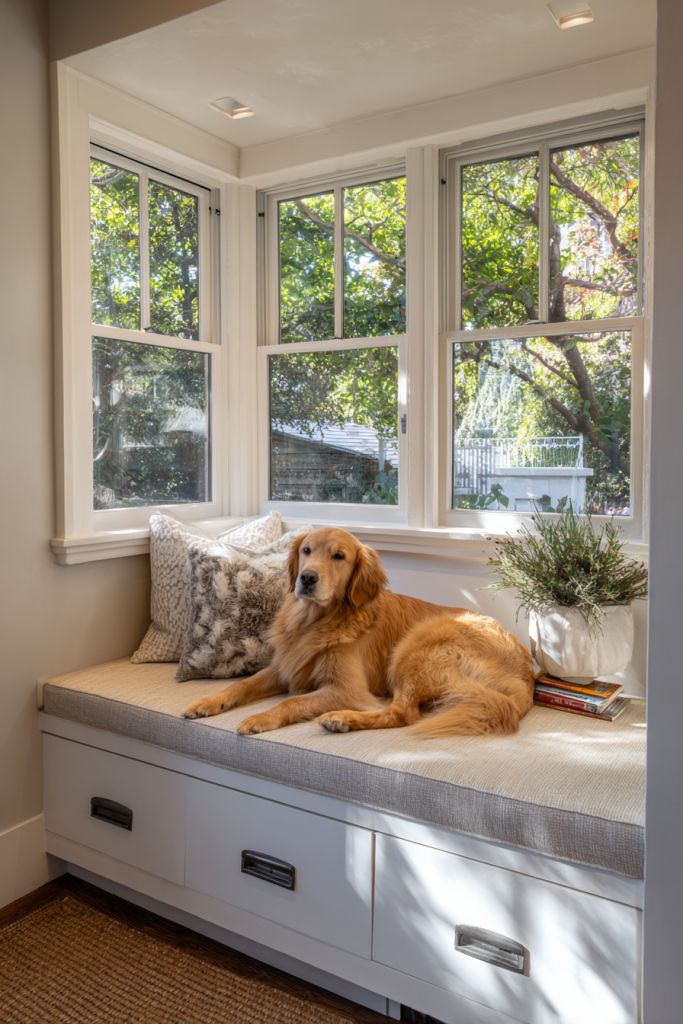
Many dogs are fascinated by the world outside, and a corner window bench allows them to indulge their curiosity in total comfort. By extending a windowsill into a wider padded bench, you create a perfect perch where your dog can watch for the mail carrier or track squirrels in the yard. You can use the space beneath the bench for integrated storage drawers to hold toys and blankets, keeping the corner tidy and functional. This setup provides your pet with plenty of natural light and mental stimulation throughout the day, which can be especially helpful for dogs who spend long hours indoors. It turns a simple window into a multi-functional piece of furniture that serves as a bed, a lookout point, and a storage unit all in one.
6.) The Minimalist Floating Bed Corner
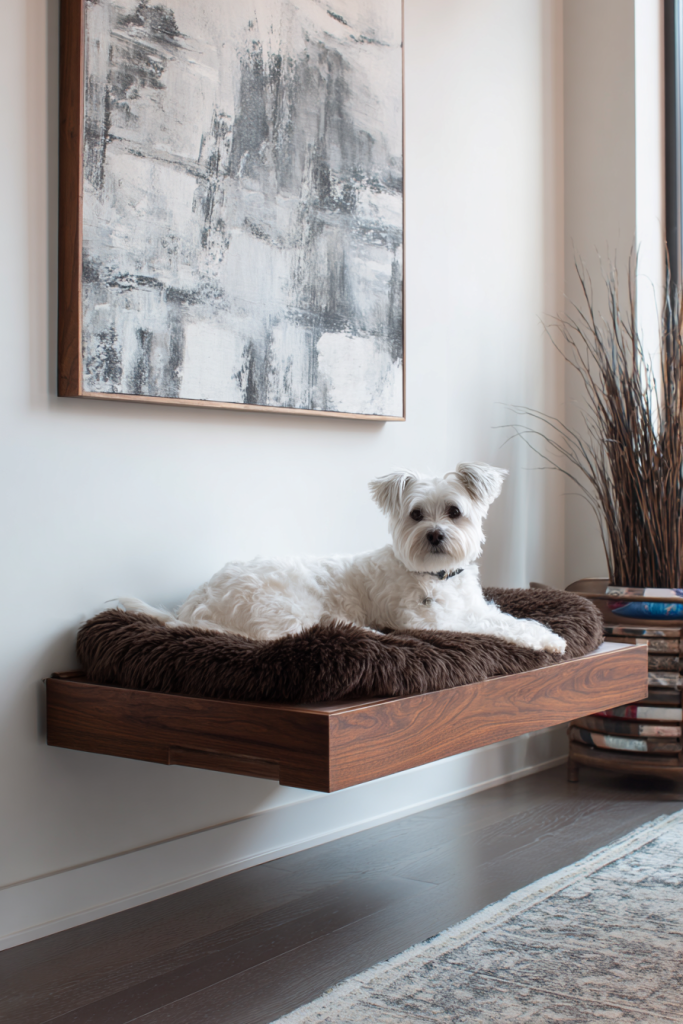
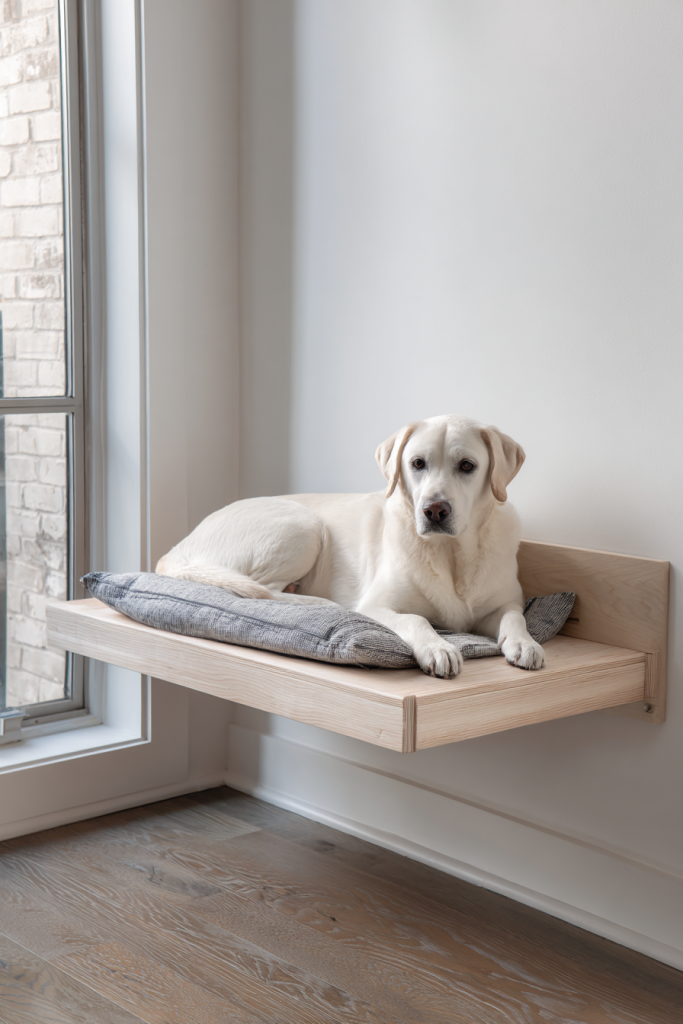
For the modern home that favors clean lines and open spaces, a floating dog bed attached to the wall offers a sleek and sophisticated look. By mounting a sturdy wooden platform a few inches off the floor, you create a designated spot that feels light and airy rather than bulky. This design makes it incredibly easy to vacuum or mop under the bed, ensuring that the dog’s corner remains hygienic and hair-free with minimal effort. You can paint the platform to match your baseboards or leave the natural wood grain exposed for a Scandinavian aesthetic. It is a subtle way to define your dog’s territory without cluttering the room, providing a firm and elevated sleeping surface that many older dogs find easier to access than a traditional floor pillow.
7.) The Mudroom Wash-and-Dry Haven
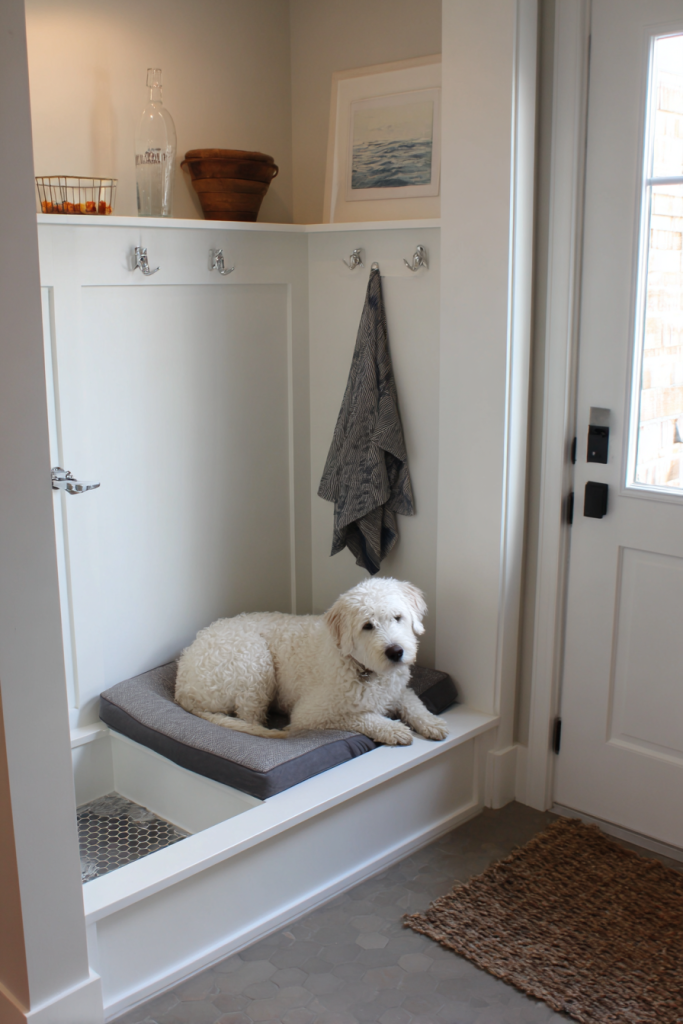
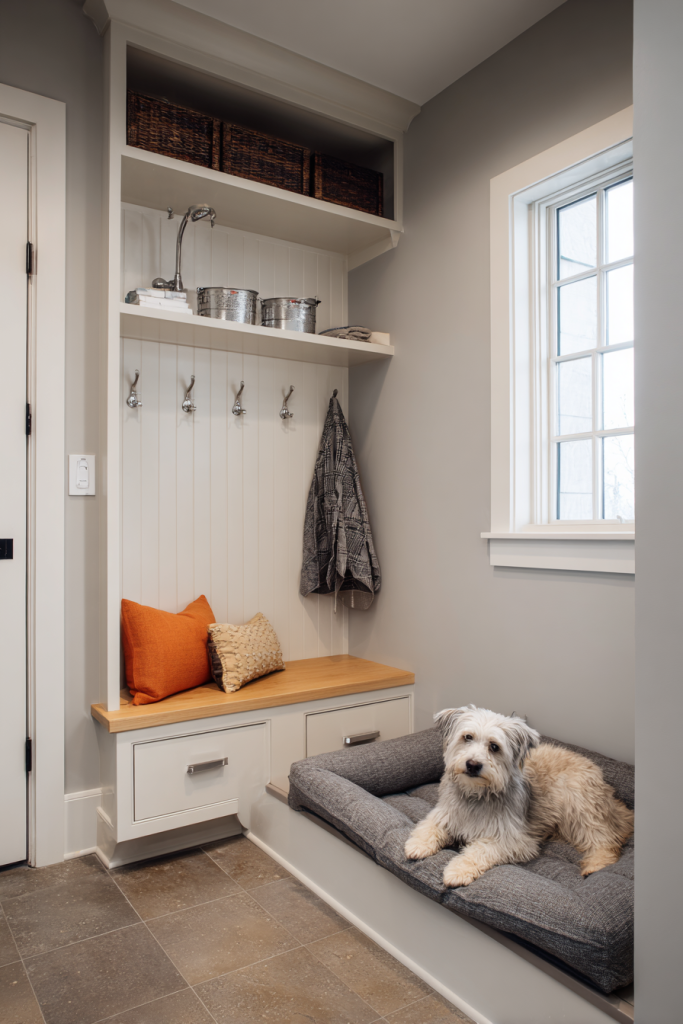
If you have a mudroom or a large entryway, converting one corner into a dedicated cleaning station and resting spot is a practical masterstroke. You can install a low-profile dog shower for rinsing off muddy paws and then place a quick-dry orthopedic bed in the adjacent corner. This setup ensures that the mess of a rainy walk stays contained in one area of the home, preventing dirt from being tracked onto your carpets or furniture. Adding a few hooks for damp towels and a small bin for dirty toys keeps the space organized and efficient. It transforms a utilitarian entry into a welcoming transition zone where your dog can be cleaned, dried, and rested before they ever step foot into the main living areas of the house.
8.) The Indoor Picket Fence Den
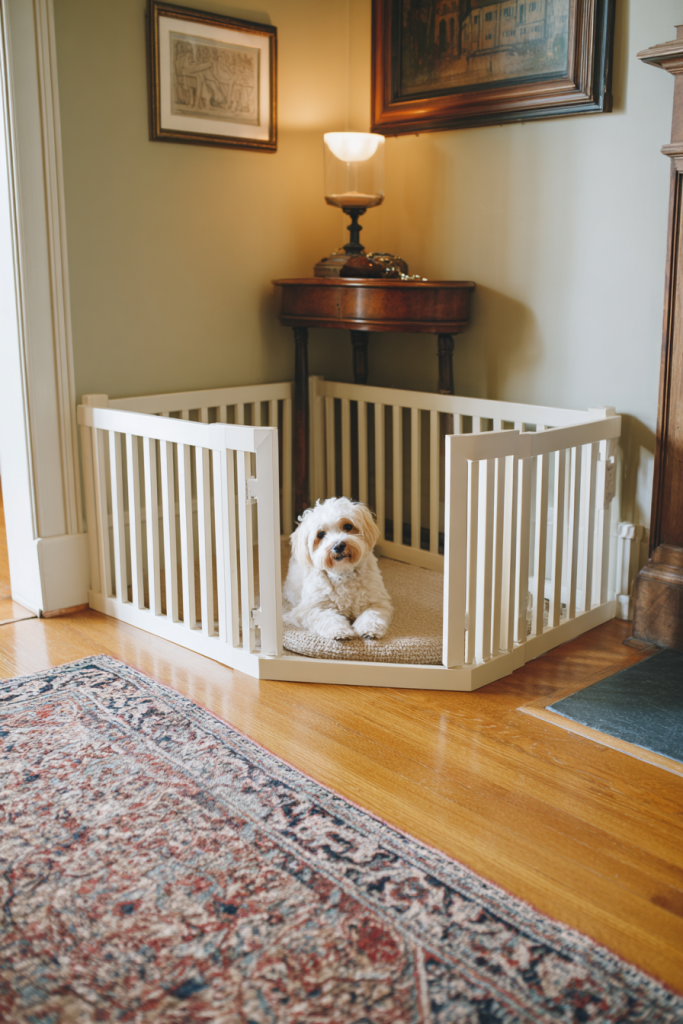
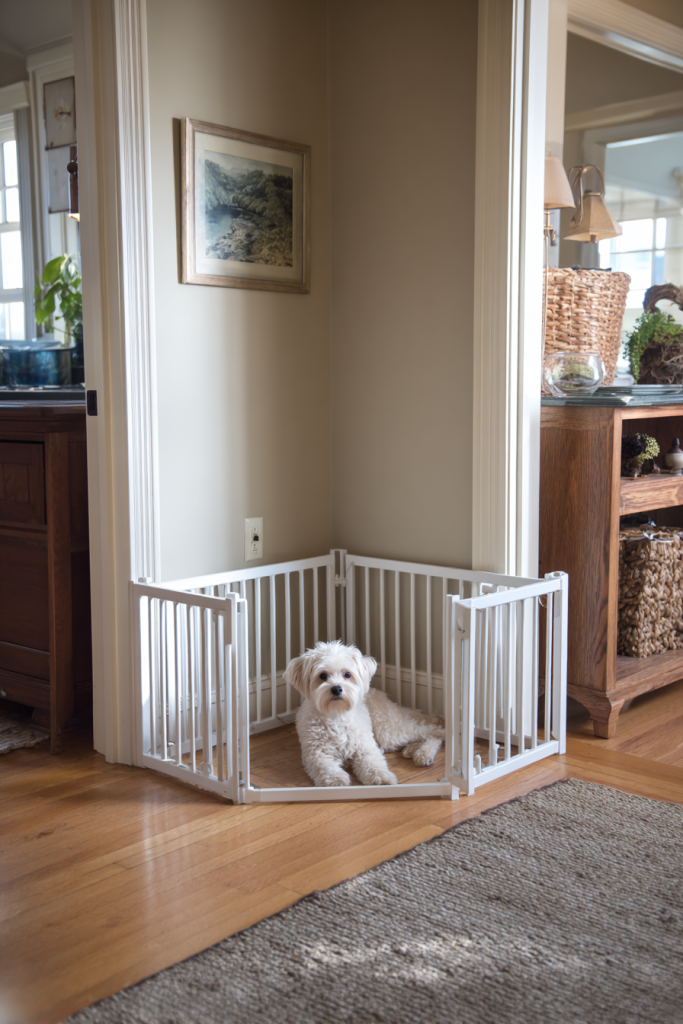
For those who want to create a clear physical boundary for their dog without using a metal crate, a small indoor picket fence can define a charming and open corner. This low-profile barrier allows the dog to see everything happening in the room while clearly marking the space as theirs. It is a fantastic option for puppies who are still learning the rules of the house or for senior dogs who need a quiet spot away from the energy of children or other pets. You can customize the height and color of the fence to match your room’s trim, making it look like an intentional architectural detail. It provides a sense of security and structure without making the dog feel isolated or trapped behind solid walls.
9.) The Wall-Mounted Accessory Station
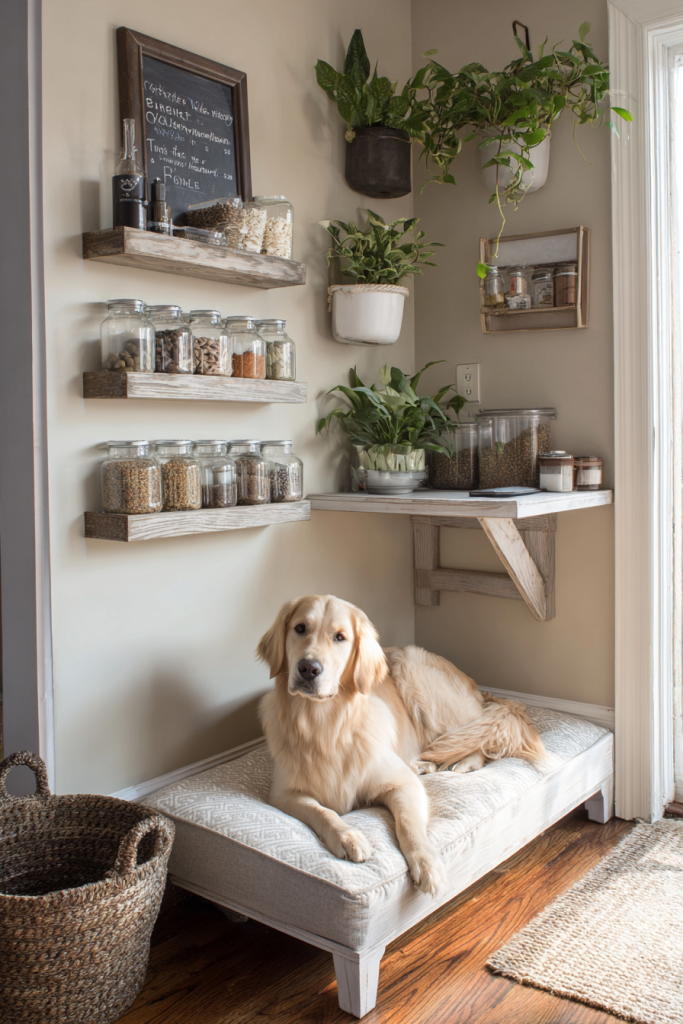
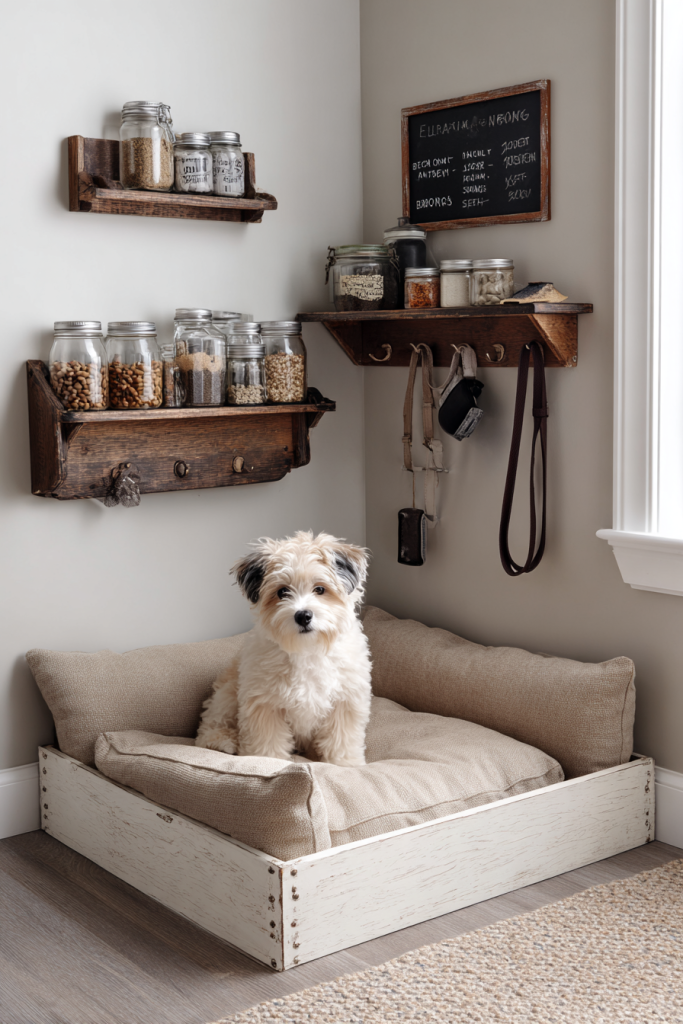
A dog corner is not just about the bed; it is about the organization of their entire life, and a wall-mounted station can keep everything in its place. By installing a series of decorative hooks, a small chalkboard for feeding schedules, and a shelf for apothecary jars filled with treats, you turn a blank wall into a functional command center. This prevents the cluttered look of leashes draped over chairs or treat bags sitting on the counter. You can place the dog’s bed directly underneath this station to tie the whole corner together visually. It creates a centralized hub for all pet-related activities, making it easier for every family member to stay on top of the dog’s care while keeping the rest of your home feeling tidy and intentional.
10.) The Zen Garden Sensory Corner
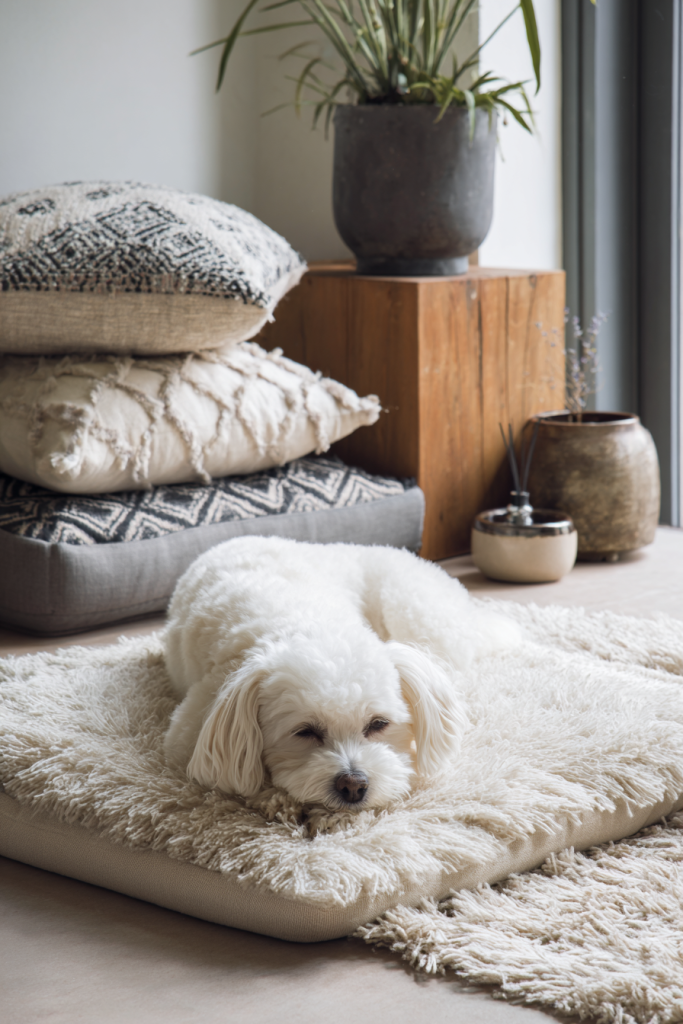
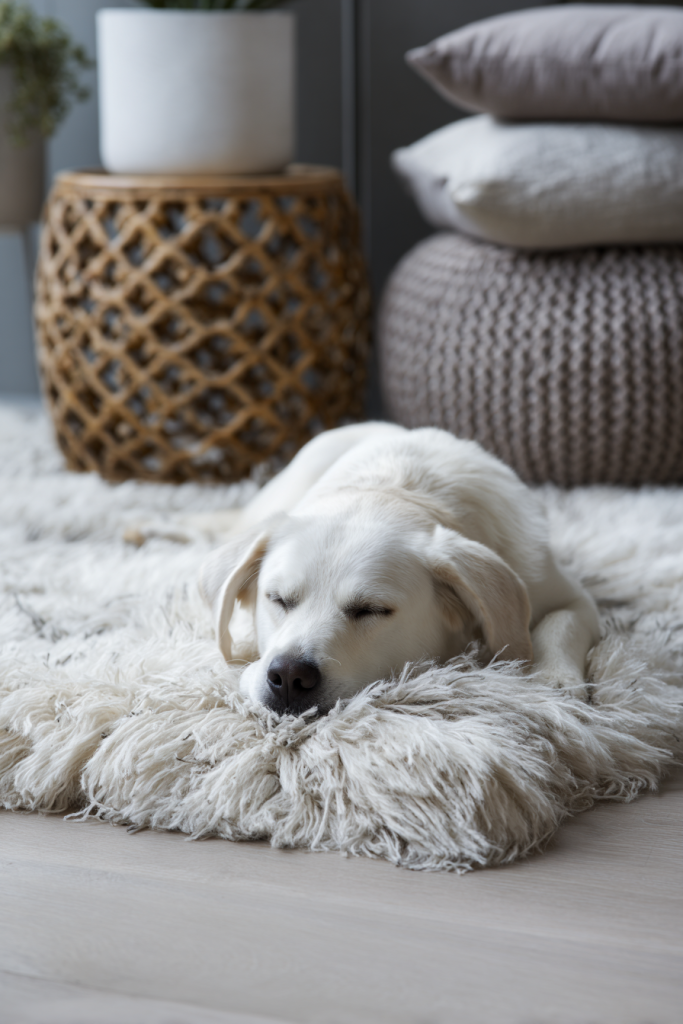
For the dog that needs a little extra help relaxing, a sensory corner filled with calming textures and scents can be a game-changer. You can use a thick, shag-pile rug to provide a variety of tactile sensations and place a pet-safe diffuser nearby with a hint of lavender to promote relaxation. Including a few different types of pillows, such as a bolster bed and a flat mat, allows your dog to choose the sleeping position that best suits their mood. Adding a small, indoor-safe water fountain provides a gentle auditory backdrop that can help mask the sound of outside traffic or loud neighbors. This holistic approach to pet design prioritizes your dog’s emotional well-being, turning their corner into a true spa-like retreat that supports their mental health and tranquility.
In Closing
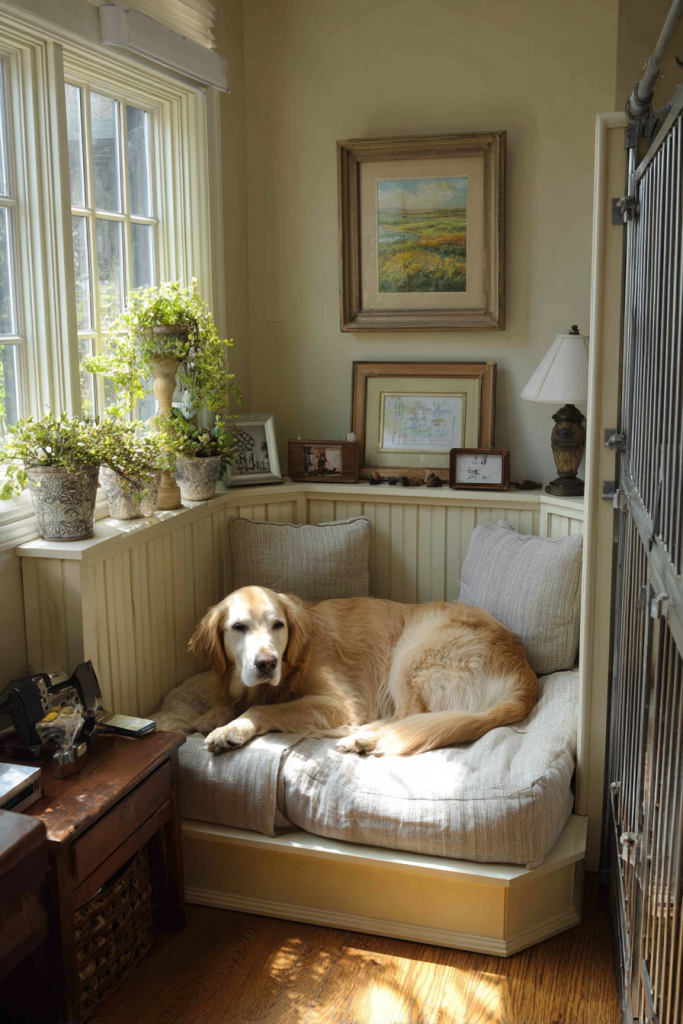
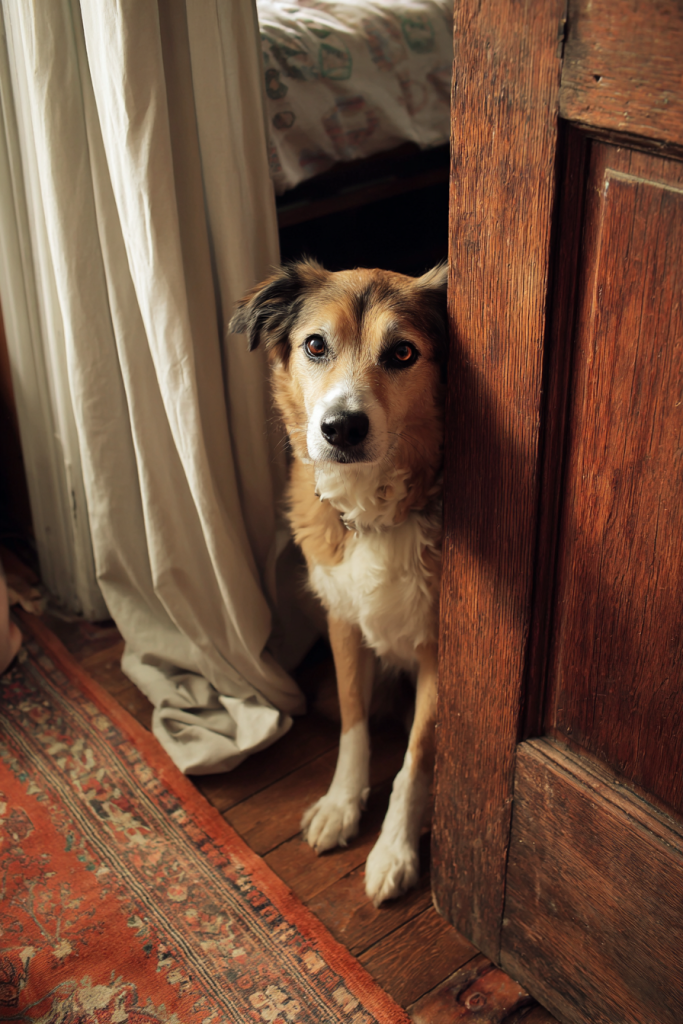
Ultimately, a dog corner is a physical manifestation of the respect and love you have for your canine companion as a living, breathing member of your household. It acknowledges that they are not just guests in your home but residents who have their own specific needs for privacy, comfort, and emotional security. By taking the time to design a space that specifically caters to their size, breed, and personality, you are fostering a deeper sense of mutual trust and harmony within your shared environment. Whether it is a grand under-stairs renovation or a simple, well-placed teepee in a quiet corner of the living room, the goal is to create a haven where your dog can truly let their guard down. When your pet knows they have a safe harbor to return to at the end of a busy day, their confidence grows, and your shared life becomes even more rewarding and peaceful.
