
integrating ramps into your home is rooted in the principles of preventative health and compassionate care. A dog that is constantly jumping on and off furniture puts unnecessary stress on their hips, shoulders, and spine, which can accelerate the onset of arthritis and other mobility challenges. By choosing to build or install a ramp, you are making a conscious decision to prioritize your pet’s physical longevity and daily quality of life. This approach shifts the focus from merely reacting to an injury to proactively creating an environment that protects their joints. It honors their natural desire to be near you on the furniture while ensuring that their skeletal system is supported, allowing them to remain active and connected to the family without the risk of further strain or discomfort.
1.) The Sofa Step-Up


This simple, sturdy design is perfect for living rooms where your dog wants to join you on the couch but struggles with the height. By creating a shallow, carpeted incline that attaches securely to the side of your sofa, you allow your dog to walk up to their favorite spot instead of leaping. The key to this build is using a high-quality, slip-resistant rug or outdoor carpet for the surface, which provides the traction needed for your dog to feel confident. The structure can be built from plywood and supported by a frame of two-by-fours, ensuring it is rock-solid and stable enough to support even larger breeds as they navigate the transition from floor to cushion.
2.) The Bedside Slide
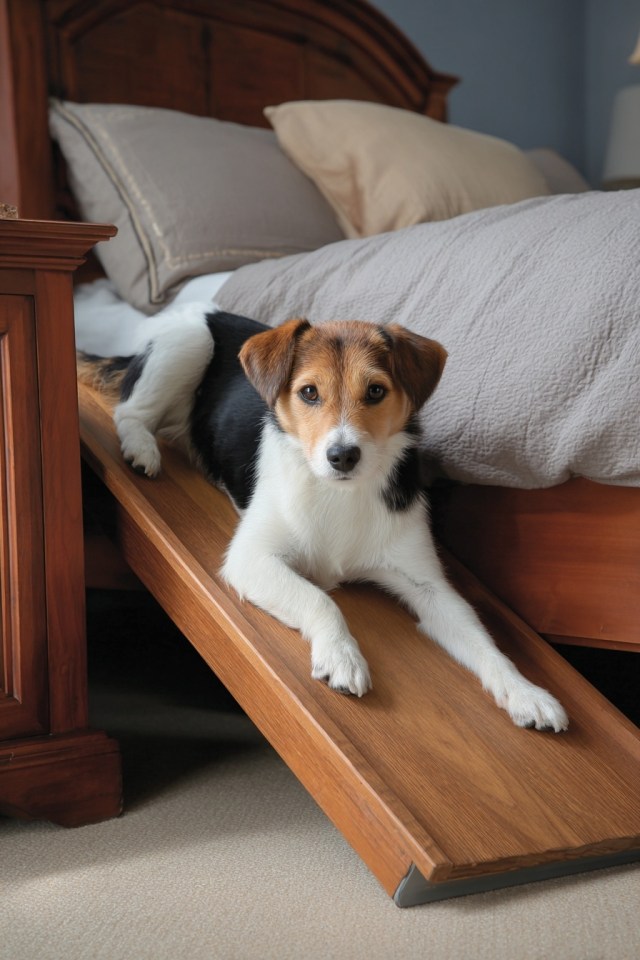

For the dog who sleeps with you at night, a bedside ramp is a essential piece of furniture that prevents those jarring morning jumps out of bed. This ramp should be long enough to create a gentle slope, as a steep incline can be just as difficult as a jump for a dog with limited mobility. By utilizing a longer, foldable design that tucks under the bed frame during the day, you can save floor space while ensuring the ramp is ready when needed at night. Covering the surface with a soft, rubber-backed material ensures that your dog has a firm grip, and the gentle slope encourages them to use it naturally rather than trying to climb over the side.
3.) The Portable Car Trunk Ramp


Getting in and out of a vehicle is one of the most common places where dogs experience joint strain, making a portable, folding ramp an essential tool for any pet owner on the go. This design should be lightweight, perhaps using aluminum or thin, reinforced wood, and feature a telescoping or accordion mechanism that allows it to collapse into a compact size. The non-slip surface is critical here, as the ramp might be exposed to outdoor elements like rain or mud. By making the ramp easy to deploy and store, you ensure that you always have it on hand, making trips to the park or the veterinarian much safer and more comfortable for your dog.
4.) The Porch Bridge Ramp


If you have a home with a raised porch or a set of front steps, a permanent, weather-treated ramp is the best solution for daily outdoor access. This ramp should be built using pressure-treated lumber or composite decking materials that can withstand exposure to the sun and rain without rotting or warping. You can even landscape around the edges, adding decorative potted plants or small stones to help the ramp blend into your porch aesthetic rather than looking like an industrial addition. This solution provides a seamless, safe path for your dog to head outside for their potty breaks, removing the need for them to navigate stairs that can become slippery or daunting as they age.
5.) The Adjustable Height Ramp


An adjustable ramp is the ultimate versatile solution for owners who have multiple pieces of furniture or want a ramp that can grow with their dog’s needs. By incorporating a series of notches and a locking pin system into the side rails, you can change the angle and height of the ramp to suit everything from a low ottoman to a high bed. This design requires a bit more craftsmanship, but the long-term utility is well worth the effort. It is perfect for owners who are unsure of exactly how much height they need or for households with different dogs who have varying degrees of mobility, allowing you to fine-tune the incline for optimal safety.
6.) The Heavy-Duty Plywood Track


For larger breeds that require a wider, sturdier surface, a track-style ramp built from thick, high-grade plywood is the best approach. This design features raised side walls that act as guardrails, giving your dog a sense of security and preventing them from stepping off the edge. By using thicker wood and reinforcing the structure with a cross-beam support underneath, you create a platform that does not flex or bounce, which is essential for dogs who might be nervous about unstable surfaces. This ramp can be painted to match your decor, making it a functional, built-in part of your home that looks like a permanent piece of furniture.
7.) The Carpeted Folding Accordion


The folding accordion ramp is a triumph of space-saving engineering, ideal for homes where you want a ramp that disappears when not in use. By using a series of hinges and panels, you can create a ramp that unfolds into a long, stable incline and then collapses down to the size of a small suitcase. The secret to making this design practical is adding a dedicated handle and a lightweight, yet durable surface, such as dense, low-pile carpeting. This ensures that the ramp is easy to grab and move, making it simple to keep in a closet or under a bed until your dog needs it to reach their favorite lounging spot.
8.) The Hidden Drawer Ramp


For a truly seamless integration into your home, consider building a ramp that pulls out from underneath your existing furniture, like a sliding drawer. This design works exceptionally well with low-profile beds or sofas, where the ramp is stored completely out of sight when not in use. You can use drawer slides to ensure the ramp moves smoothly and quietly, popping out when you need it and sliding back into the furniture frame when the dog is done. It is the perfect aesthetic solution for pet owners who love a clean, minimalist home but refuse to compromise on the comfort and accessibility needs of their canine companion.
9.) The Outdoor Landscaped Ramp


Why settle for a bulky, detached ramp when you can integrate one directly into your backyard landscaping? If your home has a slight elevation change to the yard, you can create a gentle, graded slope using natural stone, packed earth, or pressure-treated timber tiers, creating a ramp that looks like a deliberate feature of the garden. By planting non-toxic ground cover or small shrubs along the sides, you make the ramp feel like a natural part of the environment rather than a utilitarian addition. This is a brilliant, long-term solution for aging dogs who still enjoy their time in the yard but need a helping hand to navigate different levels.
10.) The Low-Profile Coffee Table Ramp


Many dogs love to be in the center of the living room, and a coffee table ramp can help them reach the sofa or a nearby platform without the need for a steep climb. This ramp should be designed with a very shallow incline, focusing more on surface grip than sheer height. Because it is in such a high-traffic area, you can customize the finish to match your table’s wood, using matching stains and finishes to ensure it fits perfectly into the room’s aesthetic. By providing this easy, gentle access point, you encourage your dog to stay near you, promoting a social and relaxed environment that feels inclusive and accessible for your furry friend.
A Lasting Blueprint for Your Dog’s Mobility


Creating a custom ramp for your dog is an act of love that directly translates into their daily comfort and long-term health. Whether you choose to build a simple, permanent structure for your porch or a sophisticated, folding design for your bedroom, the most important aspect is ensuring that the ramp provides a safe, non-slip, and stable surface that your dog can use with confidence. As you observe your pet using their new ramp, you will likely notice a significant reduction in their hesitation and a boost in their overall quality of life. These DIY projects are an investment in their happiness, ensuring that they can continue to be an active, comfortable part of your family for years to come.
